Risk, and how we talk about it
The Cigarette Index: A Memorable Idea with Serious Limits
Can health risks really be converted into cigarettes? What the comparison gets right, where the maths fails, and how to read lifestyle risk more accurately.
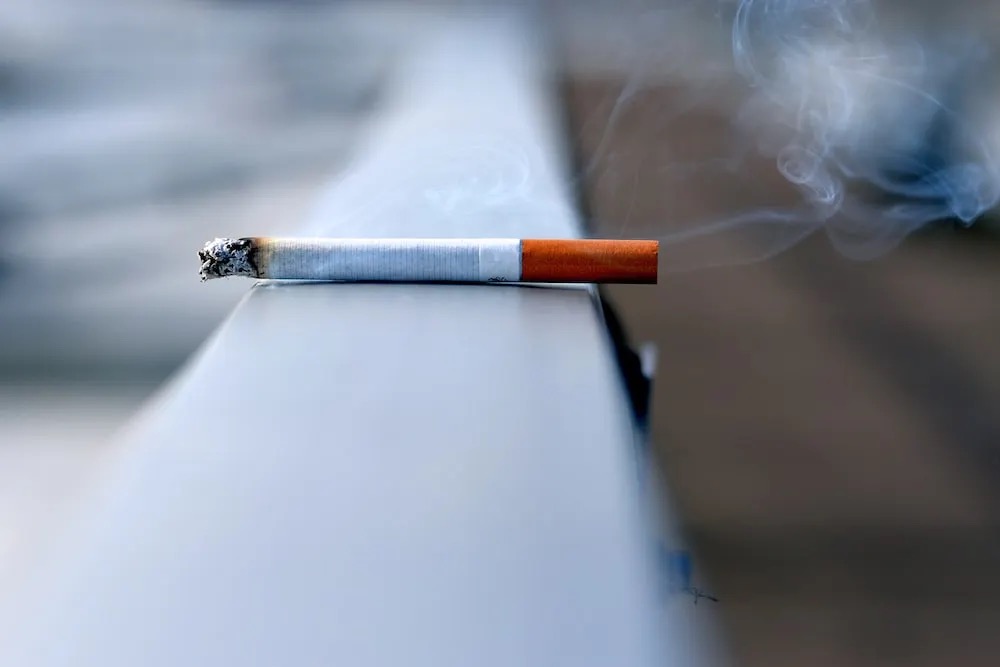
A “cigarette equivalent” is an irresistible way to describe health risk. Almost everyone understands that smoking is harmful, so saying that loneliness, inactivity, alcohol, or air pollution is “like smoking X cigarettes a day” turns an abstract statistic into something vivid.
But vivid is not the same as valid.
Health studies measure different outcomes in different populations over different periods of time. A relative increase in mortality, a change in a biological marker, and a difference in national life expectancy cannot be placed on one scale simply by dividing them by an assumed number of minutes lost per cigarette.
That was the flaw in the original version of my Cigarette Index. The comparisons were memorable, but they implied a precision the underlying evidence could not support. This revised article explains what the metaphor can teach us—and why it should not be used as a health calculator.
Where did “minutes lost per cigarette” come from?
In 2000, three researchers published a short calculation in The BMJ titled “Time for a smoke? One cigarette reduces your life by 11 minutes”.
Their calculation was based on men only. They took an estimated 6.5-year difference in life expectancy between male smokers and non-smokers, then divided it by the estimated number of cigarettes a regular male smoker would consume over his smoking lifetime. The result was approximately 11 minutes per cigarette.
This did not mean that smoking one cigarette started an 11-minute countdown. It averaged the estimated lifetime difference between groups across an assumed lifetime total of cigarettes. It depended on the population, time period, smoking pattern, age range, and life-expectancy data selected.
In 2025, researchers revisited the calculation using more recent British mortality and smoking data. Their updated estimate was approximately 20 minutes per cigarette on average—17 minutes for men and 22 minutes for women (Jackson, Jarvis and West, 2025).
The changed number does not show that an individual cigarette suddenly became almost twice as harmful. It shows that the estimate is sensitive to its inputs. Both versions are population-level illustrations of the cumulative harm of long-term smoking, not precise measurements of the effect of one cigarette on one person.
The underlying conclusion remains firm: smoking is extremely harmful. The World Health Organization says all forms of tobacco use are harmful and there is no safe level of exposure. The US Centers for Disease Control and Prevention reports that quitting reduces premature-death risk and can add as much as ten years to life expectancy; quitting is beneficial at any age.
Why a universal Cigarette Index does not work
1. Relative risk is not lost lifespan
Suppose a study reports that one group has a 20% higher relative risk of death during its follow-up period. That does not mean its members lose 20% of their expected lifespan.
Relative risk compares the probability of an outcome in one group with the probability in another. It does not reveal the underlying absolute probability (Tenny and Hoffman, 2023). A 20% relative increase changes a 1-in-100 risk to 1.2 in 100, but changes a 20-in-100 risk to 24 in 100. The same relative figure can therefore describe very different absolute differences.
There is also no direct conversion from a relative mortality risk to life expectancy. The result depends on baseline mortality and on how deaths are distributed by age. Researchers need age-specific death rates and a life-table model to estimate a change in life expectancy (Dempsey and Kautz, 2020).
2. Different outcomes are not interchangeable
“Risk of death,” “risk of a particular disease,” “cell ageing,” and “life expectancy at birth” answer different questions.
A study of telomere length or another biomarker cannot establish that participants have lost the same number of years of life. A disease-specific risk cannot automatically be treated as an equal change in all-cause mortality. National life expectancy describes a population under its current mortality conditions; it is not a personal forecast for every resident.
Combining those endpoints in one index creates the appearance of comparison without a common unit of measurement.
3. Association is not always causation
People who exercise, drink coffee, sleep well, or have strong social ties may differ from comparison groups in many other ways. Researchers try to adjust for age, income, existing illness, smoking, diet, and other factors, but unmeasured differences may remain.
Reverse causation can matter too. For example, an undiagnosed illness might cause someone to exercise less or stop drinking coffee before it causes a recorded health outcome. That can make the behaviour appear more protective than it really is.
Randomized trials can reduce some of these problems, but it is often impractical or unethical to assign people to potentially harmful exposures for decades. Good observational research is still valuable; it simply needs to be described with appropriate uncertainty.
4. Dose, timing, and the individual matter
Health risks rarely increase in a perfectly straight line. The effect of an exposure can depend on:
- How much and how often someone is exposed.
- The age at which exposure begins and ends.
- How long it continues.
- Existing health conditions and medication.
- Other exposures occurring at the same time.
- Whether the outcome is measured over five years or fifty.
This is why “one beer equals one cigarette” is not a defensible conversion. Alcohol causes health risks, but the WHO notes that risk varies with the amount and frequency consumed, age, sex, health status, and context. A universal cigarette number discards precisely the information needed to understand that risk.
5. Risks overlap and cannot simply be added
Inactivity, income, education, housing, diet, body weight, pollution, stress, and social connection are related. Adding a cigarette score for every factor would count some of the same pathways more than once.
Some factors also interact. The combined effect may be greater or smaller than the arithmetic sum of two independent estimates. A total such as “47 cigarettes today” would therefore be false precision, not a personalized assessment.
What the comparisons can—and cannot—tell us
The responsible alternative is to compare the quality and meaning of the evidence, not invent a shared cigarette unit.
| Factor | What reliable evidence supports | Why a cigarette conversion misleads |
|---|---|---|
| Tobacco smoking | Strong causal evidence links smoking with cancer, cardiovascular disease, respiratory disease, and premature death. Stopping reduces risk. | Even minutes-per-cigarette estimates average long-term group differences; they do not predict an individual outcome. |
| Alcohol | Alcohol has a causal role in numerous diseases and injuries, including several cancers. Risk generally rises with exposure. | The outcome, drinking pattern, duration, baseline health, and comparison group all change the estimate. |
| Physical inactivity | Regular activity reduces the risk of several chronic diseases and is associated with lower all-cause mortality. | An association measured across groups cannot be divided by “minutes per cigarette” to produce a daily dose. |
| Social disconnection | A substantial observational evidence base links weak social connection with poorer health and premature mortality. | The widely repeated “15 cigarettes” line is a visual comparison between pooled associations, not a direct biological or lifespan equivalence. |
| Air pollution | Fine-particle exposure causes cardiovascular and respiratory harm and contributes substantially to premature mortality worldwide. | Exposure differs by pollutant, concentration, duration, location, and vulnerability, and is often not under individual control. |
| Education, income, and place | Social and economic conditions strongly influence opportunities for good health and access to protection and care. | These are overlapping structural determinants, not personal habits or doses comparable with cigarettes. |
The physical-activity evidence is a good example. The WHO reports that insufficiently active people have a 20–30% higher risk of death than sufficiently active people. That is meaningful public-health information. It still does not establish that inactivity “equals six cigarettes a day,” because the statistic is relative, the groups differ, and no age-specific life-expectancy calculation has been performed.
The same caution applies to the often-quoted statement that lacking social connection is as dangerous as smoking up to 15 cigarettes per day. The US Surgeon General’s advisory describes the comparison figure as a visual approximation of odds of premature mortality. It communicates that social connection matters; it does not show that loneliness exposes the body to the same substances, diseases, or exact loss of life as smoking 15 cigarettes.
Air pollution presents a different problem. The WHO estimates that outdoor air pollution caused 4.2 million premature deaths worldwide in 2019. That burden is serious, but turning where somebody lives into a personal cigarette score obscures the need for clean-energy, transport, housing, and industrial policy.
Structural conditions are not unhealthy “choices”
The original index compared education and living in an African country with smoking. Those comparisons were inappropriate as well as statistically unsound.
The conditions in which people are born, grow, work, live, and age shape health. According to the WHO’s overview of social determinants, these include education, nutritious food, housing, working conditions, income, discrimination, conflict, and access to public services.
A country-level life-expectancy difference is the combined result of deaths at many ages and from many causes. It can reflect maternal and child health, infectious disease, violence, road safety, environmental exposure, health-care access, income, and data quality. Describing that difference as cigarettes smoked by an individual shifts responsibility away from systems and towards people who may have little control over the exposure.
The better question is not “How many cigarettes is this country worth?” but “Which preventable conditions create this health gap, and what would reduce it?”
A better way to read a dramatic health comparison
When a headline translates a food, behaviour, or social condition into cigarettes, ask:
- What outcome was actually measured? Disease, death during follow-up, a biomarker, or modelled life expectancy?
- Is the number absolute or relative? “50% higher” can be large or small depending on the starting risk.
- Was the study observational? If so, what confounders and reverse-causation problems might remain?
- Who was studied? Results from one age group, sex, country, or clinical population may not apply to everyone.
- What was the dose and duration? “Drinking,” “exercise,” and “poor sleep” are not single uniform exposures.
- How uncertain is the estimate? Look for confidence intervals, sensitivity analyses, and whether other studies agree.
- Does the comparison lead to useful action? A memorable analogy should not replace specific, evidence-based guidance.
What is worth acting on?
Rejecting the conversion does not mean rejecting the underlying evidence.
- If you smoke, quitting is one of the most important changes you can make for your health. Benefits begin after stopping and continue over time. A clinician or local stop-smoking service can help with behavioural support and medication.
- Regular movement matters. Adults should work towards the WHO recommendation of 150–300 minutes of moderate aerobic activity per week, or 75–150 minutes of vigorous activity, plus muscle-strengthening activity on at least two days.
- Less alcohol means less alcohol-related risk. Your appropriate limit may depend on your health, medication, pregnancy status, history, and local clinical guidance.
- Social connection is a legitimate part of health, not a character test. Persistent loneliness deserves support, but it should not be used to frighten or blame people.
- Clean air, safe housing, education, and access to care are public-health responsibilities as well as individual concerns.
The bottom line
The Cigarette Index works as a warning about the cumulative harm of smoking and as a lesson in how health risks are communicated. It fails as a universal calculator.
There is no scientifically valid table that converts every behaviour or circumstance into cigarettes per day. Relative risks do not translate directly into lifespan; different health outcomes cannot be mixed; observational associations contain uncertainty; and social conditions are not individual vices.
The more honest approach is less dramatic but more useful: name the outcome, show the absolute and relative risk where available, describe the population and exposure, acknowledge uncertainty, and recommend actions in proportion to the evidence.
Sources
- Shaw, Mitchell and Dorling: Time for a smoke? One cigarette reduces your life by 11 minutes
- Jackson, Jarvis and West: The price of a cigarette—20 minutes of life?
- Dempsey and Kautz: Life expectancy—what does it measure?
- US Centers for Disease Control and Prevention: Benefits of quitting smoking
- World Health Organization: Tobacco
- World Health Organization: Alcohol
- World Health Organization: Physical activity
- World Health Organization: Ambient air pollution
- World Health Organization: Social determinants of health
- US Surgeon General: Our Epidemic of Loneliness and Isolation
- Tenny and Hoffman: Relative Risk
Editorial note
This article was substantially rewritten on July 19, 2026. The original version attempted to translate unrelated health statistics into cigarette equivalents. It has been withdrawn from publication because that method was not scientifically defensible.