Evidence check · Sugar in fruit
Is Fruit Too High in Sugar? Whole Fruit, Juice, and the Evidence
Whole fruit contains sugar, but its fibre, water, food structure, and nutrients make it different from juice and sugary drinks. Here is what the evidence actually supports.
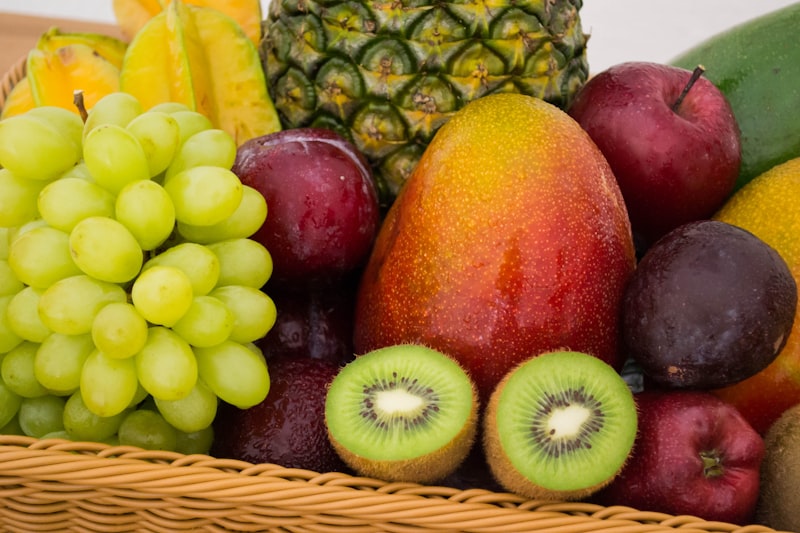
Fruit contains sugar. That simple fact has made it a target in debates about low-carbohydrate diets, diabetes, and weight loss.
But “contains sugar” is not a complete nutritional description. A whole apple and a glass of soft drink both contain sugars, yet they differ in fibre, water, food structure, nutrients, eating speed, and how easily a person can consume a large amount.
The useful distinction is not natural versus artificial sugar. It is between whole fruit, where sugar remains inside the food’s cellular structure, and products such as juice, concentrates, syrups, and sweetened fruit snacks, where that structure has been substantially changed or sugar has been added.
Why whole fruit is different
Whole fruit usually provides:
- Water and volume.
- Dietary fibre.
- Vitamins, minerals, and numerous plant compounds.
- A structure that requires chewing and slows consumption.
- Relatively low energy density compared with many snack foods.
None of those features makes fruit calorie-free or suitable in unlimited amounts. They do make it misleading to judge fruit by its sugar grams alone.
The World Health Organization’s healthy-diet guidance recommends that carbohydrates come primarily from whole grains, vegetables, fruit, and pulses. WHO classifies sugars naturally present in fruit juice and fruit-juice concentrate as free sugars; sugars contained within intact whole fruit are not placed in that category.
Whole fruit and long-term health
Large cohort studies consistently associate higher fruit and vegetable intake with lower cardiovascular and all-cause mortality. These are observational findings, so they cannot prove that fruit alone caused the difference. People who eat more fruit may also exercise more, smoke less, have higher incomes, or follow healthier dietary patterns.
A 2021 analysis combining two large US cohorts with 26 other cohort studies included nearly 1.9 million participants. Intake of about five daily servings of fruit and vegetables—roughly two fruit and three vegetable servings—was associated with the lowest mortality in that analysis. Fruit juice did not show the same pattern (Wang et al., 2021).
That finding supports dietary guidance; it does not mean two servings of fruit will reduce every individual’s mortality risk by a fixed percentage or add a calculable number of years.
Does fruit cause weight gain?
Body weight changes when energy intake and expenditure remain out of balance over time. Dietary fat is not uniquely responsible, and sugar grams alone do not determine whether a food causes weight gain.
Whole fruit can help make a meal or snack satisfying because it contains water, fibre, and volume. It can also replace a more energy-dense food. But adding fruit on top of an already adequate intake does not guarantee weight loss.
Trials and observational studies generally find that increasing whole-fruit intake is neutral or modestly favourable for weight, particularly when fruit replaces higher-calorie foods. The practical mechanism is substitution, not a special fat-burning effect.
Preparation matters. A whole orange takes time to peel and chew. Several oranges can be consumed quickly as juice, with less fibre and less chewing. Dried fruit is nutritious but compact, making a large portion easy to eat. Fruit canned in syrup contains added free sugar unless drained or rinsed.
What about diabetes?
People with diabetes do not generally need to eliminate fruit. The American Diabetes Association includes fresh, frozen, or canned fruit without added sugar as carbohydrate-containing food choices.
Portion and context still matter because fruit contributes carbohydrate. Pairing fruit with a meal or with yoghurt, nuts, or another protein-rich food may suit some people better than eating a large amount alone. Individual glucose responses, medication, kidney function, and treatment goals can change the appropriate choice.
Prospective cohort research has linked greater consumption of several whole fruits with lower type 2 diabetes risk, while greater fruit-juice intake was linked with higher risk. Substituting whole fruit for juice was associated with a modestly lower risk (Muraki et al., 2013). This remains observational evidence, not proof that one fruit prevents diabetes.
Whole fruit, juice, smoothies, and dried fruit
Whole fresh or frozen fruit
This is the default choice. Frozen fruit without added sugar is nutritionally comparable with fresh fruit and often cheaper or more convenient.
Canned fruit
Choose fruit canned in water or juice rather than syrup when possible. Check the label for added sugar. Canned fruit still provides useful nutrients and can be accessible year-round.
Dried fruit
Dried fruit retains fibre and micronutrients, but removal of water concentrates both calories and sugars into a smaller volume. Treat a modest handful as a portion rather than eating it like fresh fruit.
Smoothies
Blending usually retains more fibre than juicing, but it reduces the intact structure and makes large portions easier to consume quickly. A smoothie made from one portion of whole fruit, vegetables, and an unsweetened protein source is different from a large drink containing several fruits, juice, syrups, or sweetened yoghurt.
Fruit juice
Juice can provide vitamins, but it should not be treated as nutritionally equivalent to whole fruit. WHO counts its sugars as free sugars. A small glass is more proportionate than a large bottle, and water remains the better everyday drink.
Are some fruits “better” than others?
Different fruits provide different nutrients, but there is no need to rank them by exotic antioxidant scores.
Berries provide fibre and polyphenols; citrus provides vitamin C; kiwifruit provides vitamin C and fibre; bananas provide potassium and carbohydrate; apples and pears are portable sources of fibre and water. Affordability, enjoyment, availability, and variety matter more than finding a single “best” fruit.
People with allergies, gastrointestinal conditions, kidney disease, or medication interactions may need specific restrictions. Grapefruit, for example, interacts with some medicines. Those exceptions do not make fruit generally unhealthy.
A practical approach
For most adults:
- Choose whole fresh, frozen, or unsweetened canned fruit most often.
- Eat a variety rather than relying on one “superfruit.”
- Let fruit replace sweets, pastries, or large portions of juice instead of simply adding it.
- Keep juice modest and do not count it as an unlimited health drink.
- Check dried, canned, and packaged fruit for added sugars and portion size.
- If you monitor blood glucose, use your readings and clinical advice rather than a universal list of forbidden fruits.
The bottom line
Whole fruit is not equivalent to soft drink, table sugar, or fruit juice merely because all contain sugars. Food structure, fibre, water, nutrients, portion size, and dietary context change how a food is consumed and what it replaces.
The evidence supports including a variety of whole fruit in a balanced diet. It does not support promising a fixed amount of weight loss or lifespan from a specified number of servings. Juice and concentrated fruit products deserve more caution because their sugars are easier to consume rapidly and, in the case of juice, are classified as free sugars.
Sources
- World Health Organization: Healthy diet
- Wang et al.: Fruit and vegetable intake and mortality
- Aune et al.: Fruit, vegetables, cardiovascular disease, cancer, and mortality
- Muraki et al.: Fruit consumption and type 2 diabetes
- American Diabetes Association: Fruit choices for diabetes
Editorial note
This article was substantially rewritten on July 19, 2026. The earlier version included unsupported weight-loss and disease-risk figures and did not adequately distinguish whole fruit from juice.