Appetite · How fullness works
The Satiety Solution: Build Meals That Keep You Full
Satiety is shaped by protein, fibre, water, energy density, processing, portions, and eating context. Use those levers to make satisfying meals without turning fullness into a rigid food score.
Satiety is the period of reduced hunger after eating. It is related to satiation, the process that brings a meal to an end, but the two are not identical.
The promise of a “satiety diet” is appealing: choose foods that keep you full and weight management becomes easier. There is some truth in that idea, but no food has one permanent satiety score. The result depends on the whole meal, portion, preparation, eating speed, previous meals, sleep, activity, and the person eating it.
The useful strategy is not to search for one miracle food. It is to build meals with several features that tend to support fullness while still providing adequate nutrition.
The main levers of satiety
Protein
Protein often produces greater short-term fullness than the same amount of energy from carbohydrate or fat. A systematic review of randomized trials found that higher-protein meals reduced hunger and increased fullness in acute tests, although effects varied and longer-term evidence was less consistent (Kohanmoo et al., 2020).
That does not mean every meal should be dominated by protein. Once needs are met, adding shakes, bars, or oversized servings can simply add calories. Protein works best as one part of a meal that also contains fibre-rich plants and enough energy for the person’s needs.
Useful sources include legumes, tofu, tempeh, fish, eggs, yoghurt, lean meat, nuts, and seeds.
Fibre
Fibre can add bulk, slow digestion, and affect appetite-related signals. Its effects vary by type, dose, food structure, and the amount of water present. Reviews of randomized trials find that some fibres improve fullness or reduce later intake, but results are not uniform (Wanders et al., 2011).
Whole-food sources—beans, lentils, vegetables, fruit, oats, barley, and other whole grains—also provide nutrients and food volume. That makes them more useful than assuming any product with “added fibre” will have the same effect.
Water and energy density
Energy density describes calories per gram of food. Foods containing substantial water, such as vegetables, fruit, soups, and yoghurt, can provide a larger physical portion for fewer calories than dry, high-fat foods.
Water works differently when it is part of food than when it is consumed separately. A bowl of vegetable soup may affect meal size differently from drinking a glass of water beside a dry snack.
Low energy density is a tool, not a rule that every food must meet. Nuts, seeds, olive oil, and avocado are energy-dense but can still belong in a healthy diet. Portions and what they replace matter.
Food structure and processing
How quickly food can be eaten may influence how much is consumed before fullness signals catch up.
In a small but tightly controlled inpatient crossover trial, 20 adults ate about 500 more calories per day and gained weight during two weeks on an ultra-processed diet compared with two weeks on a minimally processed diet. The menus were designed to be similar in presented calories, macronutrients, sugar, sodium, and fibre (Hall et al., 2019).
The experiment was short and cannot tell us that every ultra-processed food causes overeating. It does show that properties such as eating rate, texture, energy density, and food formulation can matter even when a nutrition label looks similar.
Taste, attention, and eating context
Satiety is not purely mechanical. Highly varied meals, distraction, stress, alcohol, sleep loss, and easy access to snack foods can influence how much someone eats.
Eating slowly and without constant screen distraction may make internal cues easier to notice, but “mindful eating” is not a guaranteed weight-loss intervention. Hunger also varies normally from day to day.
Build a satisfying meal
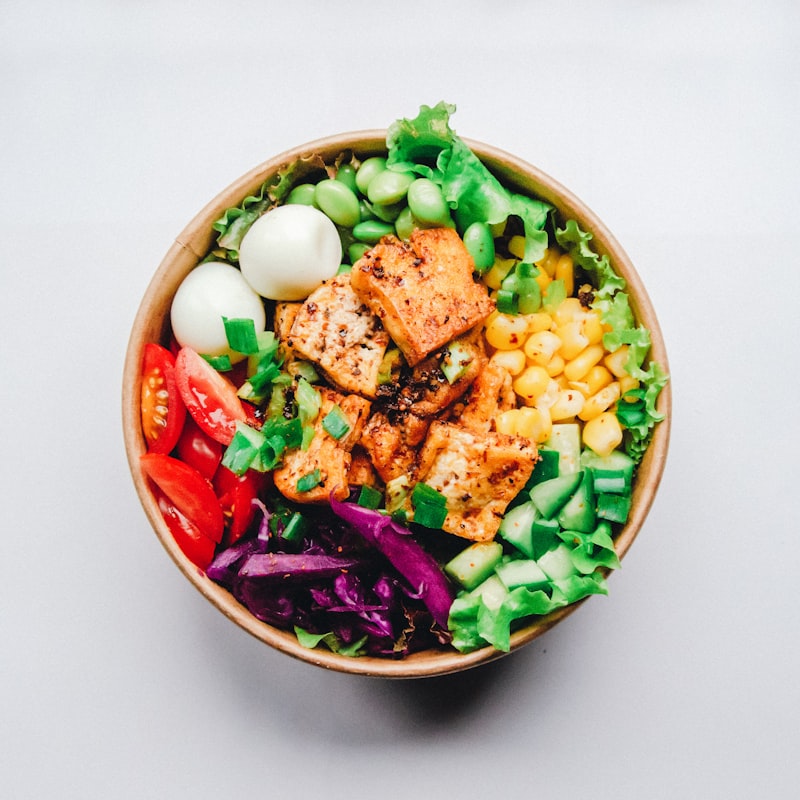
A practical meal can use four components:
- A protein source: beans, lentils, tofu, eggs, fish, yoghurt, chicken, or another appropriate option.
- A fibre-rich plant: vegetables, whole fruit, legumes, or whole grains.
- Some water-rich volume: salad, cooked vegetables, soup, fruit, or yoghurt.
- Enough carbohydrate and fat for satisfaction: potatoes, oats, rice, whole-grain bread, olive oil, nuts, seeds, or avocado in portions that fit the meal.
This is a template, not a compulsory plate. A lentil and vegetable soup with whole-grain bread already combines all four. So does yoghurt with oats, berries, and nuts.
How common foods fit
| Food | What may help | What changes the picture |
|---|---|---|
| Broccoli and cauliflower | Water, fibre, volume | Oil, cheese, or sauce can substantially change energy density; that is not inherently bad, but it counts. |
| Greek yoghurt | Protein and water | Sweetened varieties may contain considerable added sugar; fat level and portion alter calories. |
| Oats | Fibre, water after cooking, adaptable meal base | Instant flavoured products can be less filling if portions are small and sugar is high. |
| Eggs | Protein and useful nutrients | The whole meal matters: eggs with vegetables and whole-grain toast differ from eggs alongside processed meat and fried sides. |
| Lentils and beans | Protein plus fibre | Gradually increase portions if a sudden fibre increase causes gastrointestinal discomfort. |
| Apples and other whole fruit | Water, fibre, chewing | Juice removes much of the structure and is easier to consume quickly. |
| Potatoes | Water, volume, carbohydrate | Frying and energy-dense toppings change the meal; potatoes do not need to be replaced automatically by cauliflower. |
| Popcorn | Whole grain and substantial volume when air-popped | Large cinema portions, oil, butter, sugar, and salt can turn it into a very different snack. |
These foods are examples, not a ranked list. Preferences, culture, budget, allergies, and gastrointestinal tolerance should shape the choices.
Using satiety for weight management
If weight loss is appropriate, satiety-focused substitutions may make a calorie deficit easier to tolerate. Examples include:
- Replacing a sweet drink and pastry with yoghurt, fruit, and oats.
- Adding beans and vegetables to reduce the energy density of a mince-based meal.
- Choosing a portioned bowl of air-popped popcorn instead of eating crisps from a large packet.
- Serving soup or vegetables with a meal rather than trying to suppress hunger with willpower.
The key word is replace. Adding “healthy” foods without reducing anything else may improve nutritional quality but does not necessarily reduce energy intake.
It is also possible to make intake too low. Persistent hunger, fatigue, irritability, feeling cold, reduced training performance, or fixation on food may signal that the plan is overly restrictive.
What the Satiety Solution cannot promise
Satiety-focused eating cannot guarantee weight loss, prevent disease, or extend lifespan. Appetite is affected by medication, hormones, mental health, sleep, pain, food availability, and medical conditions. Some people experience weak fullness cues or unusually strong hunger despite eating nutritionally balanced meals.
For anyone with an eating disorder history, unexplained appetite change, unintentional weight loss, or persistent gastrointestinal symptoms, turning food into a fullness-ranking system may be unhelpful. Those situations deserve individualized assessment.
The bottom line
Satiety is not a magic property hidden inside eight approved foods. It emerges from the interaction of protein, fibre, water, energy density, food structure, portion, and context.
A repeatable approach is to include a meaningful protein source, fibre-rich plants, and enough food volume, then adjust carbohydrate, fat, and portions so the meal is both satisfying and nutritionally complete. Use the framework to make eating easier—not to create another rigid diet.
Sources
- Kohanmoo et al.: Protein consumption, appetite, and appetite-regulating hormones
- Wanders et al.: Dietary fibre, appetite, energy intake, and body weight
- Jovanovski et al.: Soluble fibre, energy intake, and perceived satiety
- Hall et al.: Ultra-processed diets, calorie intake, and weight gain
- World Health Organization: Healthy diet
Editorial note
This article was substantially rewritten on July 19, 2026. The earlier version assigned inconsistent nutrient percentages to individual foods and overstated what choosing those foods could achieve.