Healthspan · Balance
Falls Steal Years: Why Balance Is a Longevity Habit
Falls are a leading cause of injury and loss of independence after midlife. Here is how they shorten healthy years, and what a falls researcher does every day to stay upright.
Falls are not a “senior problem” that starts at 65. They are a longevity problem that begins earlier, and the damage often arrives as lost independence rather than an immediate death certificate.
Longevity writing spends a lot of ink on VO2 max, protein targets, and sleep stages. Fair enough. But ask geriatricians what quietly ends independent living, and a different answer keeps showing up: a fall. Not because every tumble is fatal, but because one fall can start a cascade that steals years of healthspan even when the calendar keeps ticking.
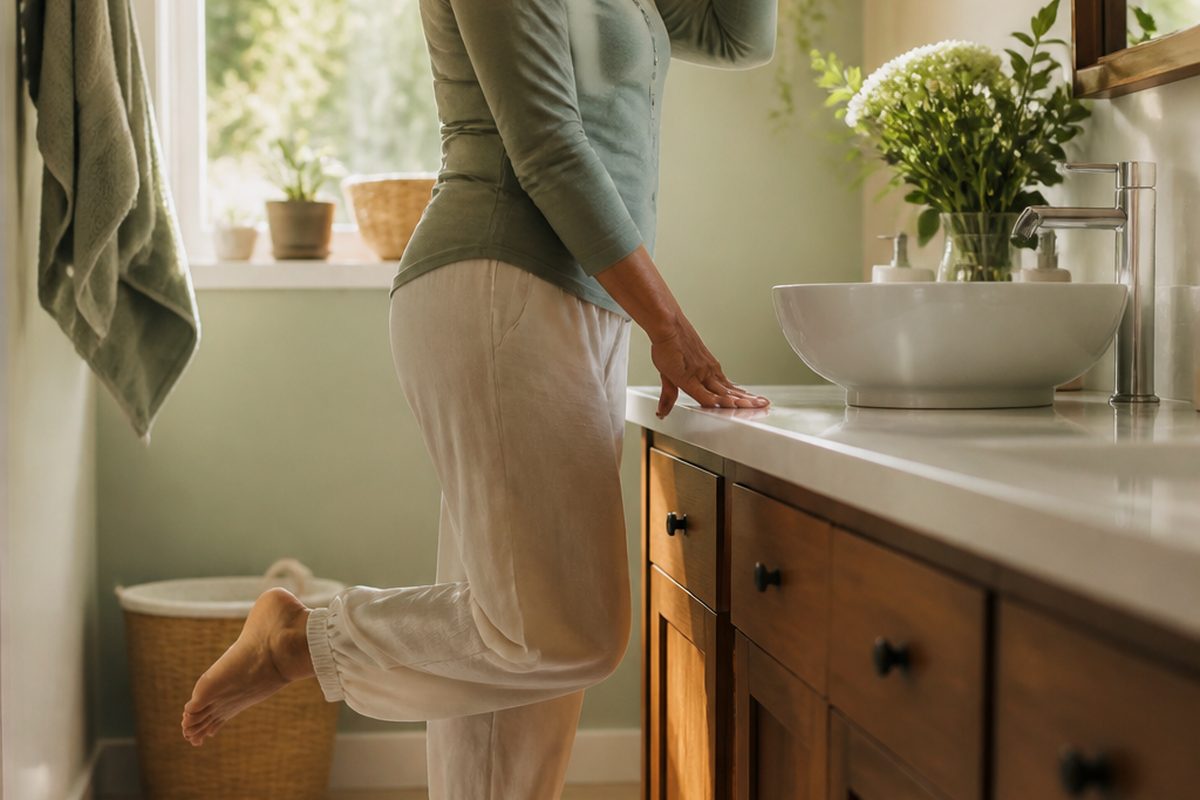
That is why Nathalie van der Velde, a professor of geriatric medicine and falls prevention at Amsterdam UMC, treats balance like a daily hygiene habit. In a recent interview (syndicated via the NZ Herald and first reported in the Washington Post), she describes standing on one leg while brushing her teeth, practising getting up from the floor, reviewing medications, and skipping outdoor bifocals. She is 51. The point is not panic. The point is that fall risk starts rising decades before the birthday when people suddenly buy a walking stick.
The longevity math of falling
The numbers are blunt.
In the United States, more than one in four adults aged 65 and older reports falling each year, and falling once roughly doubles the chance of falling again. Falls are the leading cause of injury-related death in that age group. The age-adjusted fall death rate rose from 64.7 per 100,000 older adults in 2018 to 78.4 in 2024. In 2023, the national unintentional fall death rate for adults 65+ was 69.9 per 100,000, climbing sharply with age.
New Zealand’s pattern is similar. ACC reports that falls are the most common cause of injury claims, and that roughly one in three people over 65 injures themselves in a fall each year, rising toward one in two by age 80. Most of those injuries happen at home, often during ordinary tasks in bathrooms, bedrooms, and kitchens.
Hip fractures are the injury that turns a trip into a life event. About 88% of older-adult hip-fracture emergency visits and hospitalisations, and 83% of related deaths, are caused by falls. Roughly one in five people who break a hip die within a year in recent pooled estimates (around 22%, not the older textbook figure of 30%). Frailty roughly doubles the odds of dying after a hip fracture compared with non-frail patients.
But mortality is only half the story. Many people survive the fracture and lose the life they had: mobility, confidence, driving, living alone. That is healthspan, not lifespan, and it is the part longevity culture often underweights.
The cascade that shortens healthy years
A fall does not have to kill you to cost you years.
Many people who fall, even without a fracture, become afraid of falling. Fear leads to less walking, fewer errands, fewer social outings. Less activity means weaker legs, worse balance, slower reflexes. That raises the chance of the next fall. CDC guidance describes this loop plainly: fear → less activity → more weakness → more falls.
Clinicians call the bigger picture a frailty pathway: frailty → falls → fracture → complications → loss of independence. Once someone is frail, fall risk rises; once they fall hard, frailty deepens. Longevity is not only about delaying death. It is about delaying the moment when you need someone else to open the jar, climb the stairs, or decide whether you can stay at home.
This is also why a first fall in later life is treated as a clinical warning, not a clumsy accident. In research van der Velde has worked on, a meaningful share of adults 65+ experience a first fall within a couple of years of follow-up, and that event often marks a lasting turn in health and independence.
Risk rises earlier than you think
Fall prevention marketing targets “older adults.” The biology is less polite.
Van der Velde notes that fall risk already starts climbing around age 50, especially for people who are sedentary or on many medications. A fall can also be a signal of something else: cardiovascular disease, orthostatic blood-pressure drops, vision problems, neuropathy, or medication side effects. Treating every fall as “just getting older” misses a chance to catch modifiable risk.
Medications deserve special attention. Being on multiple drugs, especially those that cause dizziness, sedation, or low blood pressure, raises fall risk. Van der Velde’s practical recommendation is an annual medication review: ask whether each drug is still necessary, correctly dosed, and worth the balance cost. That is not anti-medicine. It is precision.
What a falls expert does every day
The interview details are useful because they are boring in the best way.
- Balance while brushing teeth. Stand on one leg at the sink (with a counter nearby to touch if needed). Swap legs. It turns two minutes of hygiene into balance practice.
- Practise getting up from the floor. Being able to rise after a fall, or after sitting on the floor, is a functional skill people lose quietly.
- Keep lifting and moving. Strength training alone is not enough; add balance work and stay generally fit. Supervised programmes for higher-risk older adults help. New Zealand’s Otago Exercise Programme is one of the best-studied home-based strength-and-balance protocols in the world.
- Make the house less hostile. Flat rugs, decent lighting, nonslip footwear, clear paths, slow sit-to-stand, less alcohol, enough fluids. CDC has free home checklists for a reason.
- Fix vision carefully. Cataracts raise fall risk; so can bifocals outdoors, because the reading segment can mess with depth perception on stairs and curbs. Van der Velde uses reading glasses and avoids outdoor bifocals for that reason.
- Review medicines yearly. Especially if you feel dizzy, lightheaded, or unsteady after a new prescription or dose change.
None of this is a biohack. It is maintenance of the systems that keep you upright: muscle, proprioception, vision, blood pressure control, and a home that does not try to trip you.
What this means for a longevity plan
If your longevity stack ignores balance, it has a hole.
Zone 2 improves the engine. Resistance training protects muscle and bone. Protein helps the remodel. Sleep keeps the repair crew working. Balance and fall-proofing protect the years those habits buy. A perfect ApoB with a broken hip is not a win.
Start before you feel old. Build single-leg balance into daily life. Keep enough strength to get off the floor. Treat a fall, or near-fall, as information. Ask a clinician about medications, vision, and bone health if risk is rising. In New Zealand, community strength-and-balance classes and tools such as ACC’s Live Stronger for Longer programmes exist specifically for this.
Staying upright is not glamorous. It is one of the highest-leverage ways to keep the years you are working so hard to earn.
Curious how movement and other habits stack up for you? Try the longevity calculator.
Sources
- NZ Herald: Here’s what an expert on accidental falls does every day to prevent them
- Washington Post: How to prevent falls according to a leading aging researcher (Gretchen Reynolds / Nathalie van der Velde)
- CDC: Facts About Falls
- CDC: Older Adult Falls Data
- NCHS Data Brief 532: Unintentional Fall Deaths in Adults Age 65 and Older, United States, 2023
- Moreland et al., Journal of Aging and Health: Hip fracture ED visits, hospitalisations, and deaths by mechanism, US 2019
- Downey et al., World Journal of Orthopedics: Changing trends in 1-year mortality after hip fracture
- Yan et al., Frontiers in Public Health: Frailty and adverse outcomes after geriatric hip fracture
- ACC: Injuries in New Zealand (falls as leading injury cause; older-adult rates)
- Health NZ: Fall prevention guidance
- CDC STEADI: Check for Safety home checklist