Male longevity · Kimura to Sardinia
25 Habits of the Longest‑Living Men
Lists of twenty-five habits travel well on Instagram. The useful work is sorting the ones with biographies and population evidence from the ones that only sound wise.
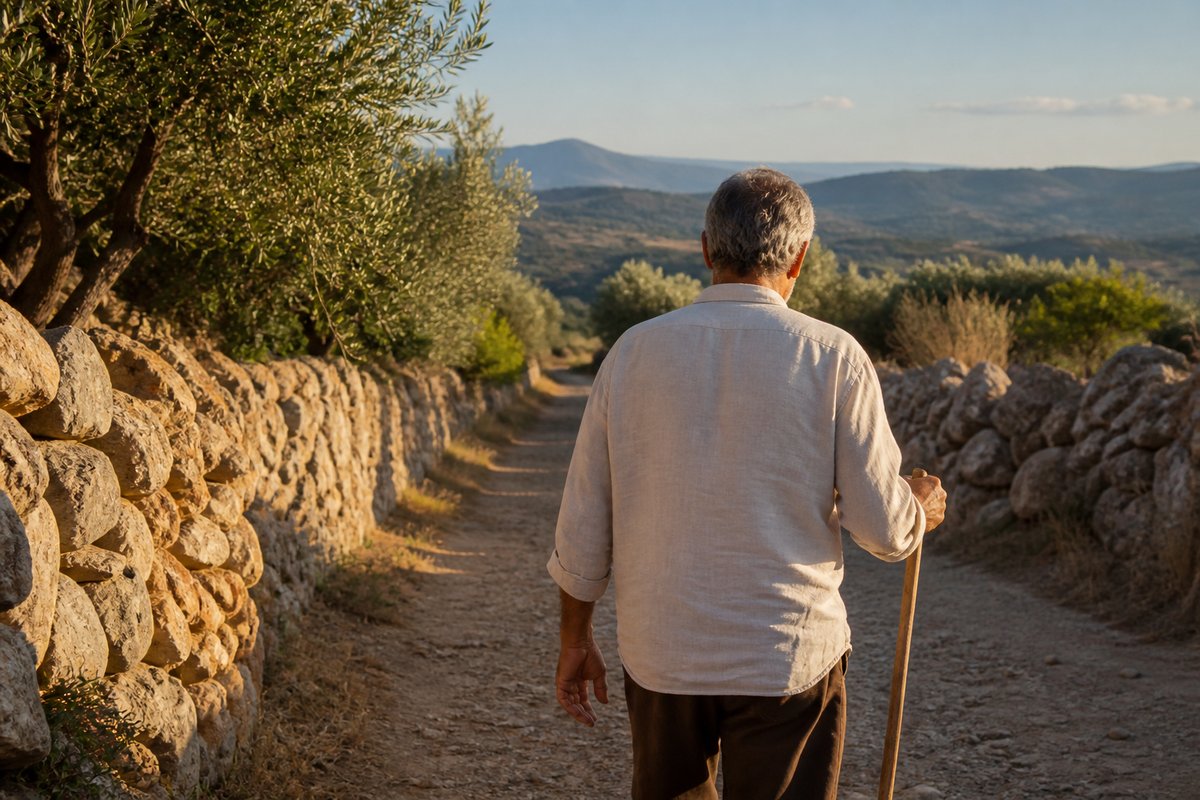
Men rarely win the centenarian numbers game. Globally, far more women reach 100. That is why two places keep getting recycled into social media carousels: the verified life of Japan’s Jiroemon Kimura, still the oldest man in recorded history at 116 years and 54 days, and Sardinia’s Ogliastra hills, where male and female longevity run unusually close.
A recent Instagram archive post from Advancing Man’s The Signature series packaged the lore as “25 habits shared by the longest-living men in recorded history.” The themes are familiar. Some are grounded in Kimura’s interviews and Blue Zone fieldwork. Others are philosophy dressed as epidemiology. This piece keeps the list’s useful spine and puts sources under it.
Two anchors, not twenty-five miracles
Start with people and places that can be checked.
Jiroemon Kimura (1897–2013) worked decades in post offices, then farmed until 90. He woke early, read newspapers for hours with a magnifying glass, followed parliamentary debates on television, and credited hara hachi bun me: stop at roughly 80 percent full. Late in life, when walking failed, he kept moving in bed with bicycle motions and daily limb work. Longevity also ran in his family. That is a biography, not a randomised trial.
Sardinia’s male Blue Zone is the other pole. In the mountain villages first mapped with blue ink by researchers around Gianni Pes and Michel Poulain, men reach extreme old age at rates far above national averages, and the usual female skew softens. Traditional shepherd life meant miles of daily walking, plant-forward peasant food, strong families, afternoon street laughter, and modest Cannonau wine with company. Genetics and isolation matter too. Habits sit on that base; they do not replace it.
Viral lists flatten those two anchors into a universal male protocol. Better to treat them as convergent clues, the same way this site treats centenarian interviews.
The habits that keep showing up
Strip the carousel to behaviours with either a named biography or a population literature behind them, and six clusters remain.
1. Stop short of stuffed
Kimura’s motto was blunt: eat light and live long. Hara hachi bu is also an Okinawan Blue Zone staple. The mechanism is not mystical. Smaller habitual portions make lifelong energy balance easier without a diet brand.
The stronger claim in some lists, that the longest-living men ate only two meals a day, is thinner. Kimura was still described as taking regular meals late in life, including a porridge breakfast. Prefer the portion cue over a rigid meal-count dogma. For the broader calorie literature, see caloric restriction.
2. Never stop moving, and walk as default
Sardinian shepherds walked for work. Kimura farmed into his nineties and, when mobility collapsed, invented a bed-bound version of training. The pattern matches what Blue Zone research keeps finding: natural, repeated movement beats occasional heroic workouts that never become identity.
This is also where modern evidence is least romantic and most stubborn. Cardiorespiratory fitness, muscle, and balance are the practical currencies of independence after 80. Falls, conversely, steal years. Daily walking and zone 2 work are boring on purpose.
3. Plants first, food close to the ground
Rice porridge, beans, garden vegetables, seasonal produce, meat as accent rather than centre. That is Kimura’s table and the classic Sardinian plate: whole-grain bread, legumes, greens, fruit, pecorino, meat mostly on Sundays.
You do not need to become a shepherd to borrow the pattern. Default meals toward plants and fibre, keep ultra-processed defaults rare, and leave room for culture. The site’s foods for longevity and food-group mortality pieces unpack the population data behind that slant.
4. Keep a reason to get up
Purpose shows up in every serious longevity stack under different names: Okinawan ikigai, Nicoyan plan de vida, “never fully retired,” “kept working long after most men quit.” Kimura farmed after a formal retirement. Sardinian elders keep social roles. The Million Veteran Program scored social connection and stress management alongside smoking and diet for a reason.
Aimlessness after work ends is a recognised risk. The enemy is not effort. The enemy is a calendar with nothing on it that needs you. More on that tension in retirement and longevity.
5. Stay curious, stay among people
Kimura’s favourite hours were newspaper hours. Lists stretch that into “read every day” and “stay curious about the world.” The durable part is cognitive engagement plus weak and strong ties: family first in Sardinia, street-corner humour, guests, church, moai-style circles elsewhere.
Harvard’s Study of Adult Development has been circling the same conclusion for decades. Relationship quality predicts healthy ageing about as stubbornly as midlife lab values. Loneliness behaves like a major risk factor. Kindness and family loyalty are hard to randomise; social infrastructure is still part of the dose.
6. Build decompression into the day
Stress rituals, gratitude on waking, acceptance of change, a less frantic relationship with death: the carousel gets more philosophical here. Some of it is Buddhist-flavoured self-help grafted onto farmer biographies.
What survives contact with evidence is narrower and more practical. Chronic threat physiology is real. Daily downshifts, restorative sleep, time outdoors, and a policy of not letting rumination colonise the afternoon show up across Blue Zone descriptions and in the lifestyle-factor literature. “Approach death without fear” is a stance, not a protocol. Sleep still is.
Mapping the viral twenty-five
If you saw the full list, most items fold into the clusters above. A shorter map, without pretending each line is equally evidenced:
Eat, move, sleep
80% full, plants first, simple food, walking everywhere, never stop moving, sleep without compromise, healthy weight without a campaign, time in nature.
Stay needed
Know why you wake up, keep working past the cultural quit date, never fully retire from contribution, keep a routine that is non-negotiable.
Stay awake upstairs
Read daily, stay curious, build stress rituals, let adversity teach, accept change, wake up grateful, hold life with a looser grip.
Stay woven in
Strong social bonds, family without exception, kindness that is practical rather than performative, moderate drink with company rather than alone.
Two lines deserve special caution. Moderate social drinking appears in Sardinian and some Ikarian descriptions; it is not a prescription to start drinking, and heavy use is unambiguously harmful. Two meals a day and living without attachment are unevenly documented across the men these lists claim to summarise. Keep them in the “interesting, lightly sourced” bin.
What this is not
- Survivor stories. We hear from the men who made it. Equally disciplined men who died at 72 do not get carousels.
- Genetics and era. Kimura had long-lived siblings. Sardinian villages were isolated for centuries. Copying breakfast does not copy either.
- Blue Zones are contested at the edges. The broad clusters (move, belong, eat plants, have purpose) are more robust than any single postcard village or wine varietal.
- Lists are not trials. Twenty-five bullet points are a mnemonic. They are not twenty-five independently proven causal levers.
So treat the Instagram genre as a prompt, not as a meta-analysis. The trial-adjacent evidence sits underneath: physical activity, plant-forward food patterns, sleep, social connection, and purpose each have independent research behind them. The longest-living men are useful because they translate that evidence into behaviours a non-scientist can copy on a Tuesday.
A short field guide
You do not need twenty-five habits. You need a few you will still do when motivation is low.
- Eat to comfortable fullness, not holiday fullness. Leave a little room.
- Put daily walking on the calendar as infrastructure, not as a mood.
- Default meals toward plants, legumes, and home cooking; keep meat as accent if you eat it.
- Protect a sleep window you will not casually bargain away.
- Keep one role where someone is counting on you, paid or not.
- Put one recurring social obligation in ink: family table, walking partner, street-corner equivalent.
- Build a five-minute daily downshift you actually like, outdoors if you can.
- Stay interested: a paper, a craft, a debate, a skill that still has a next chapter.
Kimura’s version was almost aggressively ordinary. Rise with the day. Read. Eat light. Keep the body in the game. Stay in the company of other people. The carousel makes that look like twenty-five secrets. It is closer to one life, repeated.
Curious how your current habits stack up? The longevity calculator turns them into a rough life-expectancy estimate.
Sources
- Instagram: Advancing Man, The Signature, “25 Habits Shared By The Longest-Living Men In Recorded History”
- Wikipedia / Gerontology Research Group context: Jiroemon Kimura
- The Guardian: Jiroemon Kimura on rising with the sun and reading the paper
- The Journal: Kimura at 116 on eating light
- Gondo et al., Experimental Gerontology, 2017: age verification of the longest-lived man
- Blue Zones: Sardinia, home to the world’s longest-living men
- Euronews: Sardinian Blue Zone elders, purpose, and social roles
- Harvard Health: Living in the Blue Zone / Power 9 overview
- Nguyen et al., Am J Clin Nutr, 2024: eight lifestyle factors and life expectancy (Million Veteran Program)
- Harvard Study of Adult Development