How to reduce your dementia risk: everyday steps for a healthier brain
You cannot guarantee that you will avoid dementia. But you can take steps to lower your risk—and many of them also help you stay healthier, more active and connected as you age.
Dementia is not an inevitable part of getting older. Age and inherited genes matter, but so do health, environment and opportunities throughout life. The NHS says a healthy lifestyle can help reduce the risk, even though there is no certain way to prevent every type of dementia. NHS
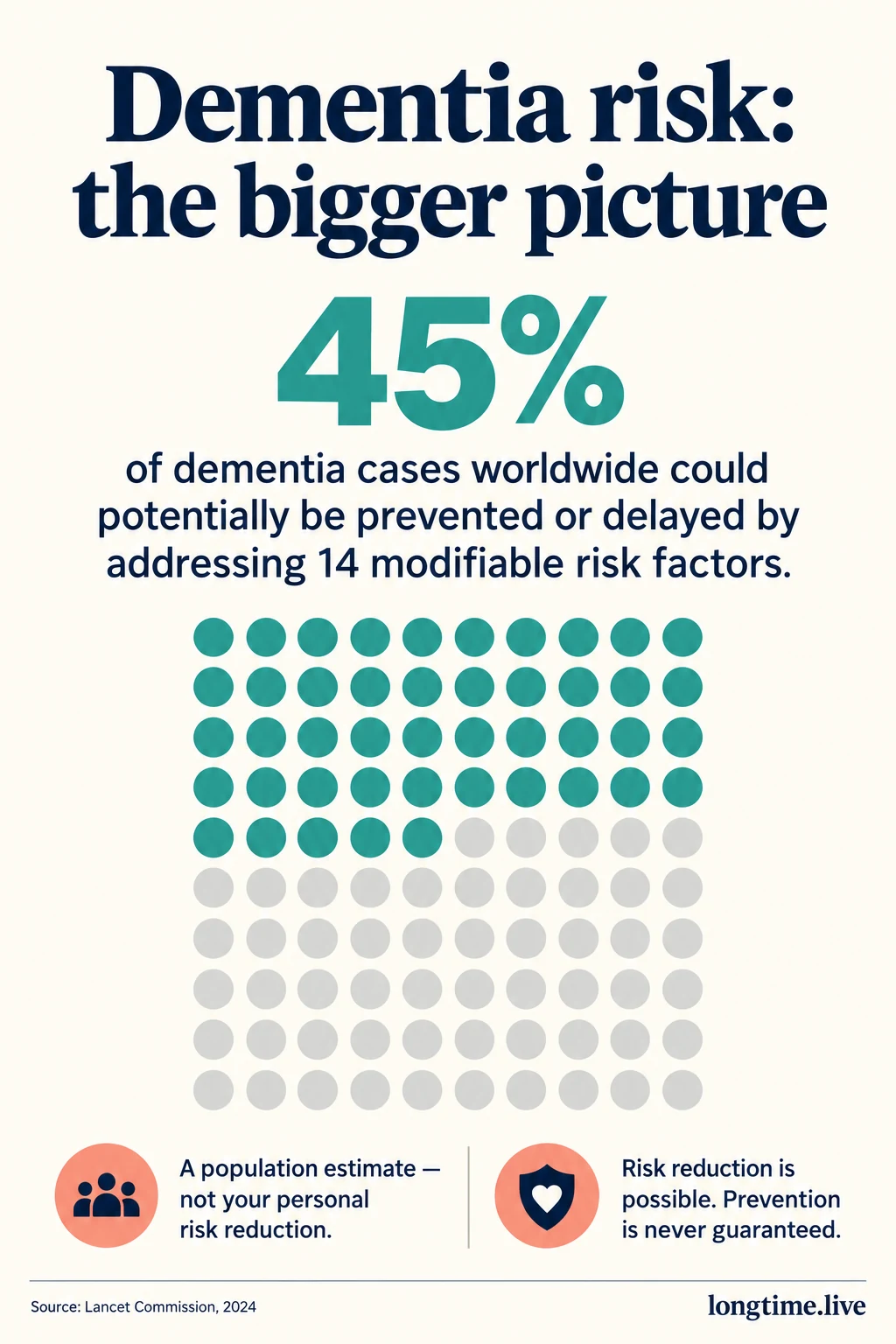
What does the “45%” figure really mean?
The 2024 Lancet Commission estimated that addressing 14 modifiable risk factors could potentially prevent or delay around 45% of dementia cases worldwide. This is a population estimate, not a promise that an individual can cut their own risk by 45%.
The factors include hearing loss, high cholesterol, high blood pressure, diabetes, smoking, physical inactivity, social isolation and uncorrected vision loss. Some require better healthcare, cleaner air and wider access to education—not just personal effort. Developing dementia does not mean someone failed to look after themselves. Alzheimer’s Research UK
Look after your heart—and keep moving
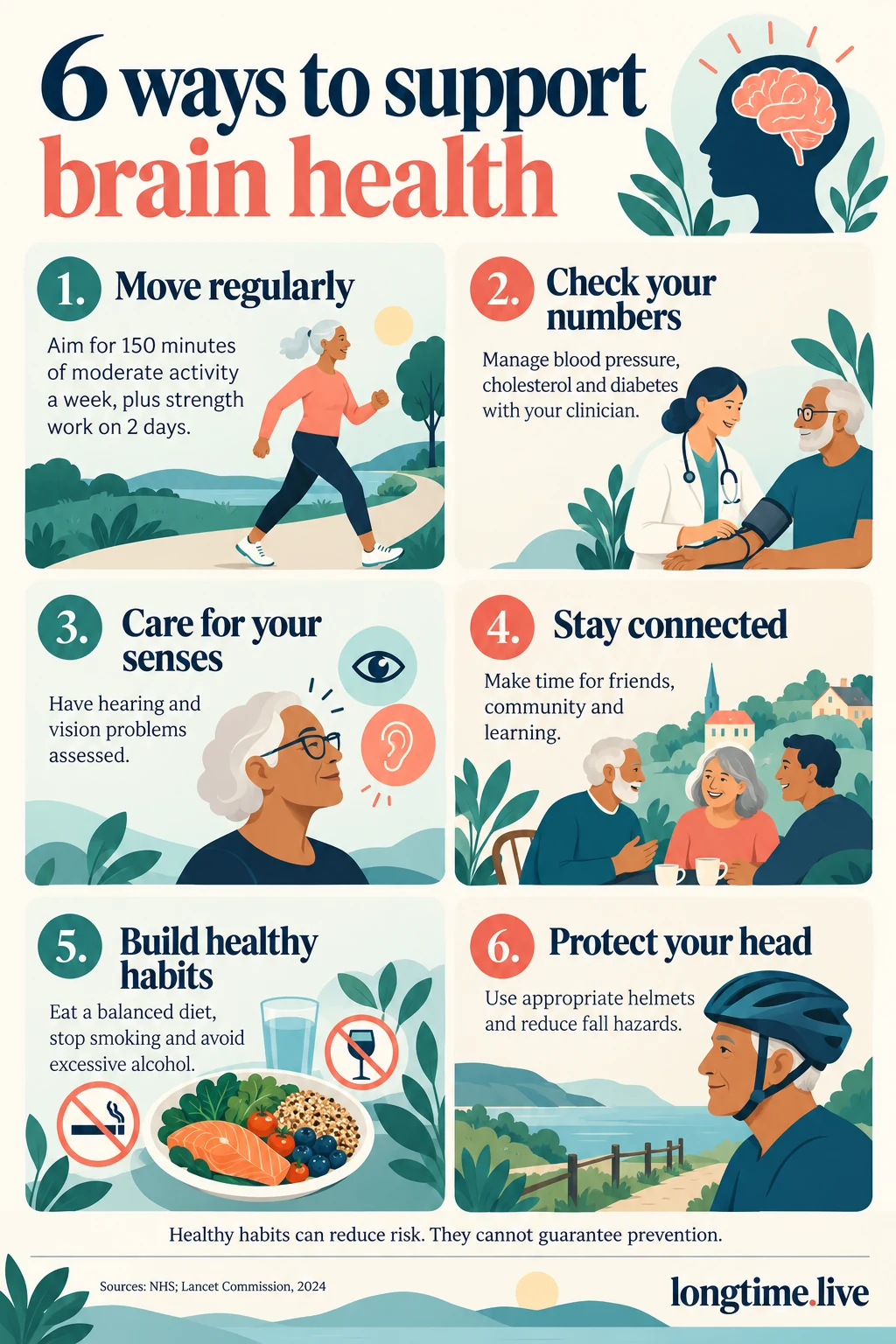
Brain health starts with familiar basics: manage blood pressure, eat a balanced diet, avoid smoking and keep alcohol within recommended limits. Ask your clinician about cholesterol and diabetes checks, and follow any agreed treatment plan. NHS, Alzheimer’s Research UK
For adults, the NHS recommends at least 150 minutes of moderate activity each week, or 75 minutes of vigorous activity, alongside muscle-strengthening activities on at least two days. Brisk walking, cycling and dancing all count. Break up long periods of sitting, and build up gradually if you are starting from little activity. These are general health targets, not a guaranteed dose for preventing dementia. NHS activity guidance
Give hearing and vision proper attention
Difficulty following conversations or seeing clearly deserves assessment. Hearing loss and uncorrected vision loss feature among the Commission’s risk factors. Arrange appropriate checks and discuss treatment or aids with a qualified professional. Protecting your senses also makes everyday activities and social contact easier. Alzheimer’s Research UK
Protect your head
Traumatic brain injury is one of the Commission’s 14 risk factors. Use appropriate helmets for activities such as cycling and take practical steps to reduce fall hazards. Air pollution is another factor; reducing exposure also requires action beyond individual habits. 2024 Lancet Commission
Keep learning and make room for people
The Science Focus article highlights research connecting education and social contact with cognitive health. A practical response is to choose activities you enjoy and can sustain: a class, a book group, volunteering or regular time with friends. These are useful opportunities for engagement, rather than a prescription that guarantees protection. BBC Science Focus
Take sleep seriously, without chasing miracle fixes
Sleep supports everyday wellbeing, but the relationship between sleep and dementia is complex. Studies linking short sleep with later dementia do not establish that changing sleep alone prevents it.
Science Focus also explores eye movements and personality traits. Those findings are interesting, but they do not establish eye exercises, more television or changing your personality as proven dementia-prevention treatments. Put established health advice ahead of headline-friendly shortcuts. BBC Science Focus
Choose one useful step this week
Book an overdue health check, arrange a walk with a friend or add a regular activity to your calendar. The aim is a routine you can maintain, supported by healthcare when you need it.
If memory or thinking changes are affecting everyday life, speak to a healthcare professional rather than relying on lifestyle changes alone.
Sources
- Livingston G, et al. Dementia prevention, intervention, and care: 2024 report of the Lancet standing Commission. The Lancet, 404:572–628
- NHS: Can dementia be prevented?
- NHS: Physical activity guidelines for adults aged 19 to 64
- Alzheimer’s Research UK: Addressing 14 health and lifestyle factors could prevent nearly half of global dementia cases
- BBC Science Focus: How to cut your dementia risk, 7 key lessons from the world’s most important studies, 7 October 2026
This article and its infographics were prepared with AI assistance. Claims, source links and graphic labels were checked against the cited sources; this is not a clinical review.