Evidence check · Chili
Does Spicy Food Help You Live Longer?
Regular chili pepper intake is linked to lower death risk in large cohorts from China, the US, Italy, and Iran. Capsaicin is the leading suspect, with a nuanced stomach-cancer caveat.
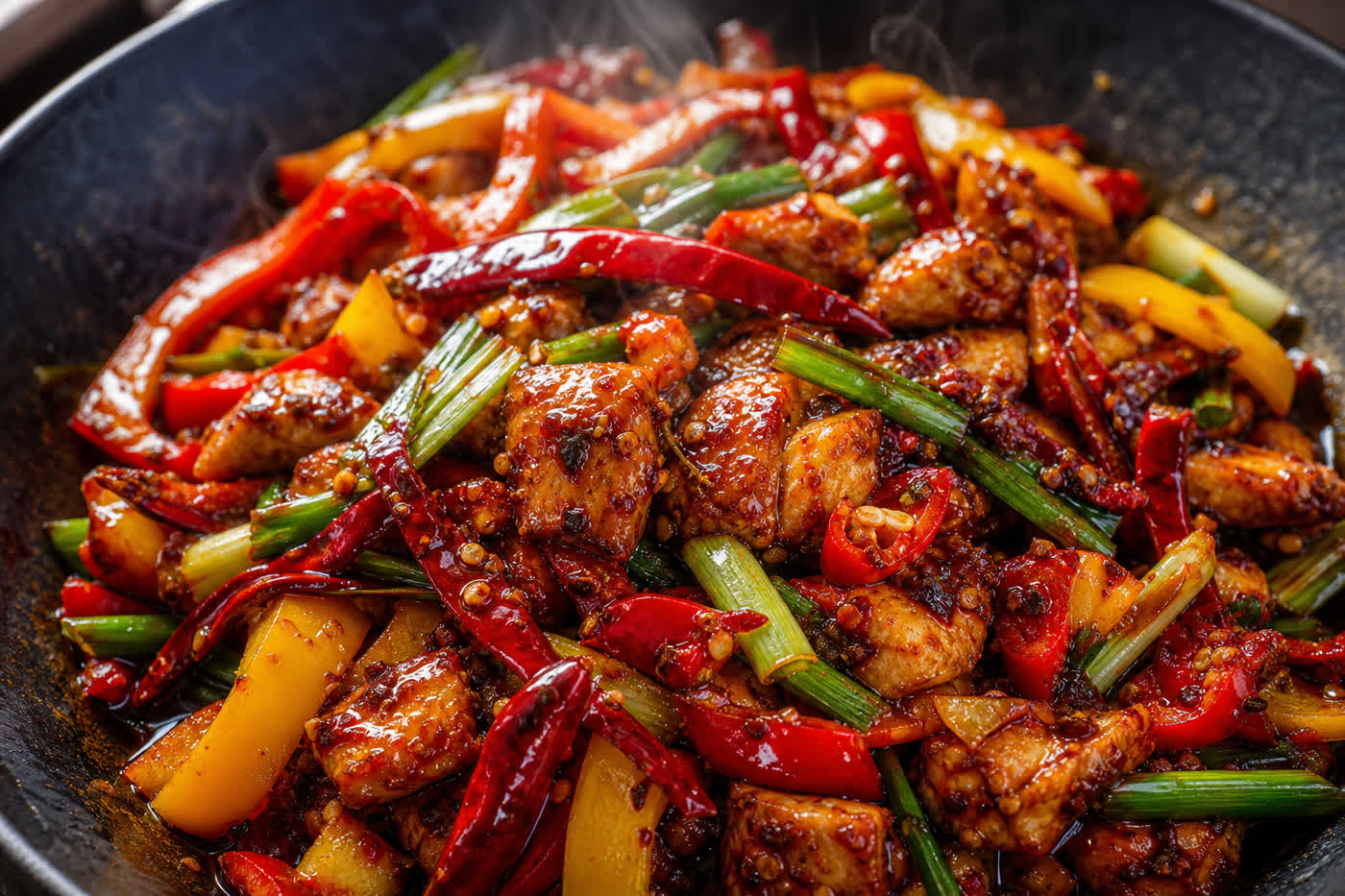
Longevity news has a soft spot for foods that sound like punishment. Chili peppers fit the brief: they burn, they make your eyes water, and large observational studies keep finding that people who eat them regularly die a little less often.
The signal is consistent enough to take seriously, and not strong enough to treat as a magic bullet. Here is what the best human evidence shows, how capsaicin might explain it, which dishes actually count, and what to make of the stomach-cancer worry that still hangs over spicy food.
What the mortality studies show
The landmark paper is a 2015 BMJ analysis of the China Kadoorie Biobank: nearly half a million adults followed for a median of 7.2 years. Compared with people who ate spicy food less than once a week, those who ate it six or seven days a week had about a 14% lower relative risk of dying. Inverse associations also showed up for deaths from cancer, ischaemic heart disease, and respiratory disease. Fresh chilli looked a touch better than dried or oil-based spice in some cause-specific analyses.
Two years later, a US NHANES III cohort of more than 16,000 adults found that consumers of hot red chili peppers had about a 13% lower adjusted hazard of death over a median 18.9 years of follow-up. Absolute mortality was also lower (21.6% vs 33.6% unadjusted), though chili eaters differed demographically from non-eaters, which is why the adjusted hazard ratio is the figure that matters.
Europe then joined in. In the Italian Moli-sani cohort, people who ate chili more than four times a week had roughly 23% lower all-cause mortality and 34% lower cardiovascular mortality than rare or never consumers, and the association held after accounting for Mediterranean-diet quality. That matters: it suggests chili is not just a marker for “people who cook proper food.”
When these cohorts (plus an Iranian one) are pooled, the picture stays coherent. A 2021 meta-analysis of four prospective studies (over 560,000 adults) reported hazard ratios of about 0.87 for all-cause mortality, 0.83 for cardiovascular mortality, and 0.92 for cancer mortality among regular chili consumers versus rare or never consumers. A separate 2021 Angiology meta-analysis landed on a similar ~12% lower all-cause mortality and a clearer heart-disease signal than stroke signal.
So across China, the United States, Italy, and Iran, regular spicy-chili intake tracks with living longer. That is more geography than most nutrition associations get.
Capsaicin, TRPV1, and plausible biology
The leading biochemical suspect is capsaicin, the compound that makes chili burn. It activates TRPV1 receptors, heat-sensing ion channels found on sensory nerves, in the gut, and on various immune cells. Laboratory and animal work has linked TRPV1 activation to anti-inflammatory signaling, antioxidant effects, improved endothelial function, modest rises in energy expenditure, and appetite effects that can nudge calorie balance.
Human dose-response data are thinner than the mortality cohorts. Capsaicin can raise energy expenditure and fat oxidation a little, and some trials show modest appetite or weight effects, but nobody has run a decades-long randomized trial assigning people to daily chili. The longevity claim still rests on observational association, not proven causation.
Lifestyle confounding is also real. People who eat spicy food often also eat more vegetables, cook from scratch, or live in food cultures with different baseline risks. The better studies adjust for diet quality, smoking, alcohol, BMI, and activity, and the association usually survives. It does not become a guarantee that adding hot sauce to every meal will extend your life by a fixed number of years.
The stomach-cancer caveat
This is the part spicy-food optimists skip, and it deserves a clear answer: some studies link high chili intake with higher stomach-cancer risk, but the evidence is mixed, geographically uneven, and heavily confounded.
Case-control meta-analyses have reported elevated odds of gastric cancer with high chili or capsaicin intake. One 2020 meta-analysis found roughly doubled odds with moderate-to-high chili consumption, driven mainly by high intake; moderate intake alone was not clearly harmful. Another 2021 analysis pooled 16 studies and reported an overall odds ratio around 1.5 for highest versus lowest chili intake, with large regional differences (stronger signals in some Mexican and Asian study sets; null or even protective patterns elsewhere).
Important caveats:
- Most of these studies are case-control, which are more vulnerable to recall bias and reverse causation than the prospective mortality cohorts.
- Stomach cancer has powerful drivers of its own: Helicobacter pylori, heavy salt intake, smoking, alcohol, and processed meats. In many chili-heavy cuisines, spice travels with salt, fermented sauces, and smoked or preserved foods.
- Capsaicin itself has a biphasic story in older meta-analyses: low intake sometimes looks protective, high intake sometimes looks harmful.
Putting that together: frequent spicy food is associated with lower overall death risk in large prospective cohorts, while very high chili/capsaicin intake has been linked to higher stomach-cancer odds in some case-control work. That is not a contradiction if chili displaces worse habits for heart and lung disease while, at extreme doses or in salty preparations, irritating a stomach already burdened by H. pylori and salt. It is also not settled enough to treat chili as a gastric carcinogen for moderate eaters.
Practical middle ground: enjoy spicy food regularly if you tolerate it; do not chase extreme heat as a longevity protocol; keep salt in check; and take persistent upper-abdominal symptoms seriously rather than blaming “just the spice.”
Dishes that actually deliver chili
“Eat spicy food” is useless advice if it means drowning fries in sugary buffalo sauce. The cohorts mostly tracked chili pepper, chili sauce, or chili oil used as a habitual seasoning, often with vegetables and home cooking. These examples fit that pattern better than novelty hot-wing challenges:
- Mapo tofu or chili-oil dumplings (Sichuan): fermented chili bean paste and chili oil over tofu or greens.
- Kimchi jjigae or gochujang stir-fries (Korean): chili paste with cabbage, mushrooms, or lean protein.
- Thai green or red curry with plenty of vegetables: fresh chilies and curry paste in a coconut-broth base.
- Mexican salsa roja, pico de gallo, or chile colorado: fresh or dried chilies with tomatoes, onion, and herbs.
- Indian vegetable or lentil curries tempered with dried red chili, cayenne, or fresh green chili.
- Arrabbiata pasta or a Calabrian chili drizzle over beans, fish, or roasted vegetables.
- Simple chili-garlic greens: wilted kale, broccoli, or bok choy with fresh chili, garlic, and olive oil.
The common thread is chili as a daily flavour habit, preferably attached to plants, legumes, or lean protein, not as a once-a-year Scoville stunt.
What this does not mean
A few guardrails keep the claim honest:
- These are associations, not proof that chili causes longer life.
- Relative risk reductions of 12–14% sound large; absolute benefits depend on your baseline risk and are rarely quantified as “extra years” in these papers.
- If spicy food wrecks your reflux, ulcers, or IBS, the longevity association is irrelevant to your dinner.
- Capsaicin supplements are not the same intervention as food. Food brings vegetables, cooking patterns, and dose control; pills do not automatically inherit the cohort results.
- Extremely high chili intake is the zone where gastric-cancer case-control signals appear. Moderation is the evidence-aligned dose, not maximum heat.
The bottom line
People who regularly eat chili peppers tend to die less often in large prospective studies spanning Asia, Europe, and North America. Meta-analyses put the all-cause mortality association around a 12–13% relative risk reduction, with clearer signals for heart disease than for every other cause. Capsaicin acting on TRPV1 receptors is a plausible mechanism, but not a proven one in humans at the lifespan scale.
Stomach cancer is the real caveat: some, though not all, studies link high chili or capsaicin intake with higher gastric-cancer odds, especially where salt, H. pylori, and preserved foods ride along. Moderate spicy cooking looks like a reasonable longevity habit. Turning every meal into a chili endurance test does not.
Curious how diet fits the rest of your longevity stack? Try the longevity calculator.
Sources
- Lv et al., BMJ 2015: Spicy foods and total and cause-specific mortality
- Chopan & Littenberg, PLOS ONE 2017: Hot red chili pepper consumption and mortality
- Bonaccio et al., JACC 2019: Chili pepper consumption and mortality in Italian adults
- Kaur et al., Am J Prev Cardiol 2021: Pepper intake and mortality meta-analysis
- Yang et al., Angiology 2021: Spicy chilli food and mortality meta-analysis
- Luo et al., 2020: Chili consumption and gastric cancer meta-analysis
- Du et al., 2021: Chili pepper consumption and gastric cancer risk