Evidence check · Whole fruit
An Apple a Day: What the Evidence Actually Supports
The proverb overpromises, but the research is kinder than sceptics expect. Whole apples track with lower mortality and diabetes risk, mainly through fibre, polyphenols, and what they replace.
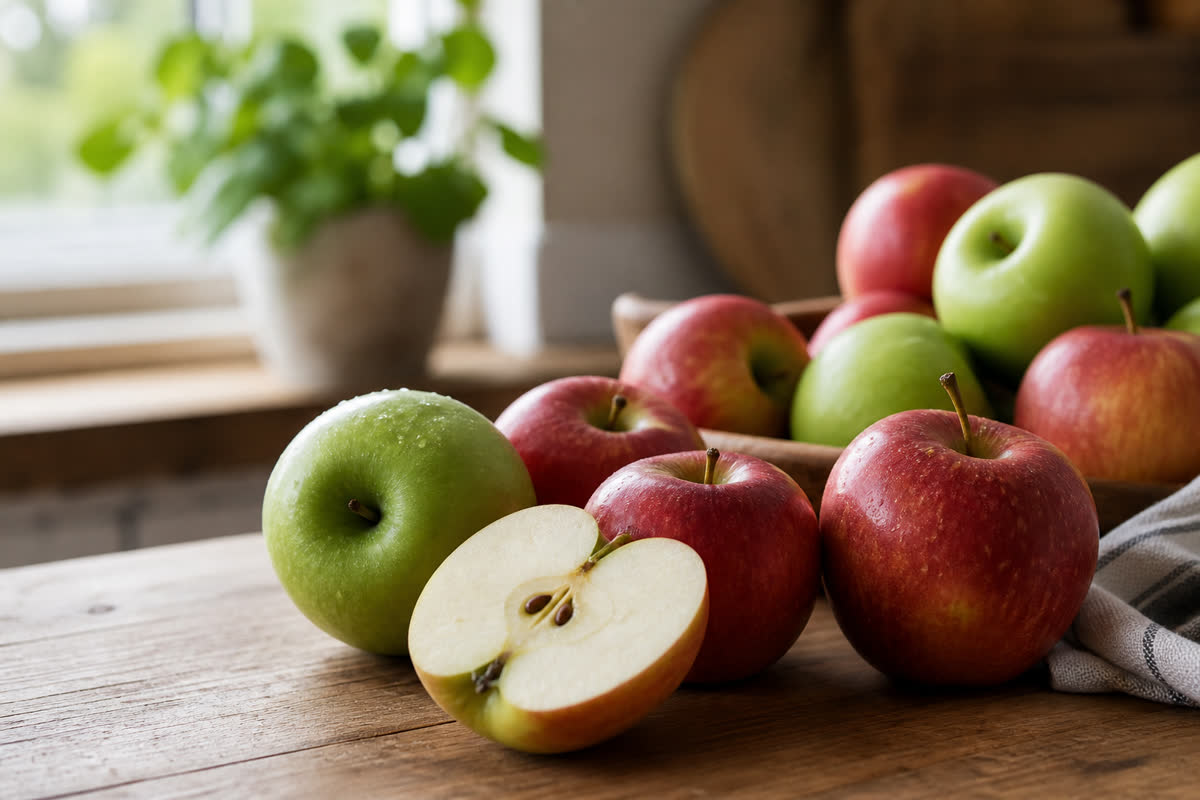
The proverb “an apple a day keeps the doctor away” is marketing that escaped into folklore. No single fruit cancels a medical career, and nobody should treat a Granny Smith like a statin.
That said, apples are not empty proverb either. They are among the world’s most eaten fruits, cheap, portable, and unusually well studied. When you separate whole fruit from juice, and observational associations from short trials, a clear picture emerges: regular apple intake tracks with better cardiometabolic outcomes, and the plausible mechanisms are boring enough to trust.
What is actually in an apple
A medium apple is mostly water, with about 4 to 5 grams of fibre, natural sugars still trapped in plant cells, vitamin C, potassium, and a dense mix of polyphenols concentrated in and just under the skin. The soluble fibre is largely pectin. The polyphenols include flavanols, flavonols, hydroxycinnamates, and dihydrochalcones such as phloridzin.
Those two families, fibre and polyphenols, do most of the explanatory work. Fibre slows digestion, feeds gut bacteria, and can modestly lower LDL cholesterol in the right context. Polyphenols reach the colon partly intact, where microbes convert them into metabolites that may affect vascular function and inflammation. Peel the apple and you throw away a large share of both.
None of that makes an apple a supplement. It makes it a useful whole food with a structure that is hard to overconsume quickly, which is the practical advantage juice never had. (More on that distinction in whole fruit versus juice.)
What the observational evidence shows
The strongest human signal comes from prospective cohorts, not folklore.
A 2019 systematic review and meta-analysis pooled intervention trials and observational studies of apple and pear intake. In the observational meta-analyses, higher apple or pear intake was associated with:
- About 15% lower all-cause mortality (summary adjusted RR 0.85)
- About 14% lower cardiovascular death (RR 0.86)
- About 11% lower cerebrovascular disease (RR 0.89)
- About 14% lower type 2 diabetes risk (RR 0.86)
Those are relative risks comparing higher with lower intake categories, not a guarantee that one daily apple subtracts a fixed number of years from your doctor’s appointment book. People who eat more apples also tend to eat more fruit overall, smoke less, and follow healthier patterns. The better studies adjust for that; they cannot fully erase it.
Still, the consistency across mortality, heart death, stroke broadly defined, and diabetes is more than a slogan deserves. A separate body of cohort work links greater whole-fruit intake, including apples, with lower diabetes risk, while fruit juice often points the other way.
What trials do and do not prove
Randomised trials of apples are shorter and smaller, so they answer different questions.
In the same meta-analysis, apple interventions produced a modest average drop in BMI (about 0.4 kg/m²) without a clear average change in body weight, blood lipids, glucose, or blood pressure across mixed populations. That is not a failure of apples so much as a reminder of what short feeding trials can detect. Hard outcomes such as heart attacks and death need years and tens of thousands of people; no ethics board is randomising “apple versus no apple” for decades.
Some lipid and blood-pressure benefits show up in individual trials, especially in people with higher baseline cholesterol, and apple polyphenol preparations sometimes move HDL or CRP in meta-analyses of interventions. Those findings are useful for mechanism; they are not a licence to promise that breakfast apple equals a drug.
The honest reading is: cohorts say regular apple eaters fare better; trials say apples are a small, safe dietary lever with modest intermediate effects. That is a respectable profile for a snack.
Why the proverb half-works
Three practical reasons the habit survives contact with evidence:
- Substitution. An apple often displaces biscuits, pastry, or a large juice. The longevity gain, if any, may come as much from what you did not eat.
- Satiety per calorie. Water, fibre, and chewing make a whole apple more filling than its sugar grams suggest. That helps energy balance without heroic restraint.
- Habit architecture. “One a day” is a simple rule. Simple rules beat optimised nutrient spreadsheets people abandon by Wednesday.
Apples are also one of the cheapest fresh fruits in many markets. Longevity advice that only works with imported berries is not longevity advice for most households.
Whole apple, not apple products
Context still matters.
- Whole fresh or unsweetened frozen apple is the default.
- Dried apple concentrates calories; a small handful is a portion.
- Apple juice strips fibre, accelerates sugar delivery, and counts as free sugar under WHO framing. A small glass is a drink, not a fruit serving.
- Apple-flavoured snacks and syrups are marketing wearing a fruit costume.
If you monitor glucose, pair fruit with a meal or with protein and fat rather than eating a large amount alone. People with fructose malabsorption or specific dental concerns may need different advice from a clinician. Those edge cases do not cancel the population pattern.
A practical take
For most adults, a daily apple is a low-cost, high-compliance way to move fruit intake toward the pattern associated with lower mortality. Eat it with the skin when you can. Treat juice as optional. Do not expect a doctor-shaped hole in your calendar.
The proverb overclaims. The food still earns its place.
Sources
- Gayer et al.: Apples, pears, cardiometabolic risk, and clinical outcomes
- Guo et al.: Apple and pear consumption and type 2 diabetes
- Koutsos et al.: Apples and cardiovascular health, fibre, polyphenols, and the gut
- Wang et al.: Fruit and vegetable intake and mortality
- World Health Organization: Healthy diet