The Power of Beans
A cup of cooked black beans provides about 15 grams each of protein and fibre. That makes a tin of beans a useful starting point for a filling, inexpensive meal.
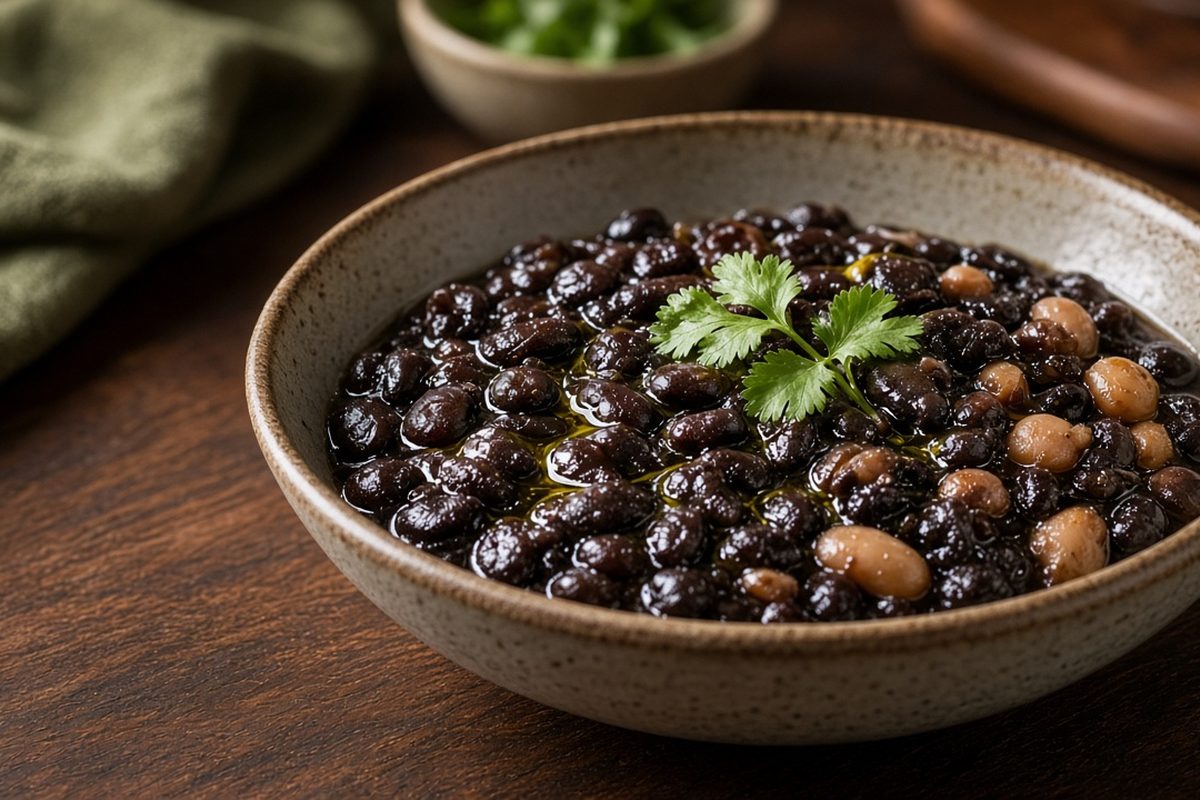
A cup of cooked black beans contains about 15 grams of protein and 15 grams of fibre. That combination helps explain why beans keep appearing in advice about satisfying meals, cholesterol and weight management.
The evidence supports a regular place for beans and other pulses. It also puts a limit on the claims: the measured changes in trials are generally small, and the connection with longer life comes mainly from observational research.
What you get in a serving
Figures from USDA FoodData Central show how familiar pulses compare when boiled without salt. Cup weights vary by food, so the portions are not identical.
| Cooked pulse | One cup | Protein | Fibre | Energy |
|---|---|---|---|---|
| Black beans | 172 g | 15 g | 15 g | 227 kcal |
| Pinto beans | 171 g | 15 g | 15 g | 245 kcal |
| Lentils | 198 g | 18 g | 16 g | 230 kcal |
| Chickpeas | 164 g | 15 g | 12 g | 269 kcal |
| Navy beans | 182 g | 15 g | 19 g | 255 kcal |
| Kidney beans | 177 g | 15 g | 11 g | 225 kcal |
Black beans also provide folate, potassium and iron, with little saturated fat. Their iron is non-haem, which is generally less readily absorbed than iron from meat. Including a vitamin C source, such as peppers or citrus, can help absorption.
Small changes in feeding trials
A 2016 meta-analysis pooled 21 randomised trials involving 940 adults. Diets containing a median 132 grams of pulses a day produced 0.34 kg more weight loss than comparison diets over a median six weeks. The confidence interval ranged from 0.04 to 0.63 kg more loss.
That is a modest average difference. It suggests pulses can help within a wider eating pattern, rather than acting as a weight-loss treatment on their own.
A 2014 analysis of 26 trials found that about 130 grams of pulses a day lowered LDL cholesterol by an average 0.17 mmol/L over a median six weeks. Results varied between trials, and clear effects were not found for every lipid measure.
Both reviews tested substantial, regular servings. They do not establish that an occasional spoonful will produce the same changes.
Why fibre matters
In a 2023 analysis of US survey data, adults reporting more legumes had gained less weight over the previous decade. Past weight was recalled, and current intake was assessed using two dietary recalls, so the study could not establish a causal effect over ten years.
The association was no longer statistically clear after adjustment for fibre intake. That suggests fibre may account for some of the relationship, though adjusting for a component of the food cannot neatly separate its contribution from the rest.
About 76% of participants reported no legumes on the two recall days. This does not mean they never ate beans, but it shows how rarely pulses appeared in those snapshots. For many households, incorporating them into a few familiar meals is a practical opportunity.
What about longevity?
In the 2017 food-group meta-analysis used by this site, the highest-versus-lowest legume comparison was borderline: relative risk 0.96, with a confidence interval of 0.93 to 1.00. A nonlinear model suggested a larger reduction as intake approached 150 grams a day, but the statistical evidence for that curve was uncertain.
Those results should not be converted into promised extra years. The more direct evidence is for nutrients and modest changes in risk factors. Beans can also replace some processed or red meat, making the comparison about the whole meal rather than one added ingredient.
Getting them into the week
Try lentils in a stew, chickpeas in a salad or canned beans in a chilli. Canned pulses are already cooked; rinsing removes some brine, and no-salt-added versions help keep sodium down. If you rarely eat pulses, start with a smaller serving and increase gradually, particularly if they cause gas.
Raw and undercooked kidney beans contain phytohaemagglutinin, a toxin that causes severe nausea and vomiting. The FDA advises soaking dried kidney beans for at least five hours, discarding the water, and boiling them in fresh water for at least 30 minutes. Do not rely on a slow cooker alone to prepare raw kidney beans. Canned kidney beans are already cooked.
The safety distinction above matters when cooking dried kidney beans. For convenience, canned beans avoid that preparation step.
People with IBS may need to adjust varieties and portions. Those with a prescribed diet, including some people with kidney disease, should follow individual advice. A daily cup is the sort of amount used in several trials, not a requirement for everyone.
The Health.com report that prompted this piece highlighted beans as a protein choice. Their fuller appeal is that protein arrives with fibre, useful minerals and several affordable ways to prepare a meal. See our satiety guide for how that combination fits into fullness.
Revised with AI assistance on October 6, 2026. This is an editorial revision, not a medical review.
Sources
- Health.com: the best protein for weight loss (the report that prompted this piece; the claims above rest on the studies, not on the news article)
- USDA FoodData Central: black beans, boiled, without salt (FDC 173735), with the same SR Legacy series for pinto (175200), lentils (172421), chickpeas (173757), navy (173746), and kidney beans (173740)
- Kim et al., AJCN 2016: dietary pulses and body weight
- Tucker, Nutrients 2023: legume intake, 10-year weight change, and abdominal adiposity
- Ha et al., CMAJ 2014: dietary pulses and LDL cholesterol
- Atkinson, Foster-Powell, and Brand-Miller, Diabetes Care 2008: international tables of glycemic index
- Schwingshackl et al., AJCN 2017: food groups and all-cause mortality
- Dietary Guidelines for Americans, 2020–2025
- FDA: Natural toxins in food, including kidney-bean preparation