Nutrition · After dinner
10 Desserts Worth Eating for Longevity
The useful dessert is not a protein brownie or a fruit-flavoured ice cream. It is a sweet plate you will actually repeat, built from fruit, nuts, yoghurt, and cocoa, and eaten instead of pastry.
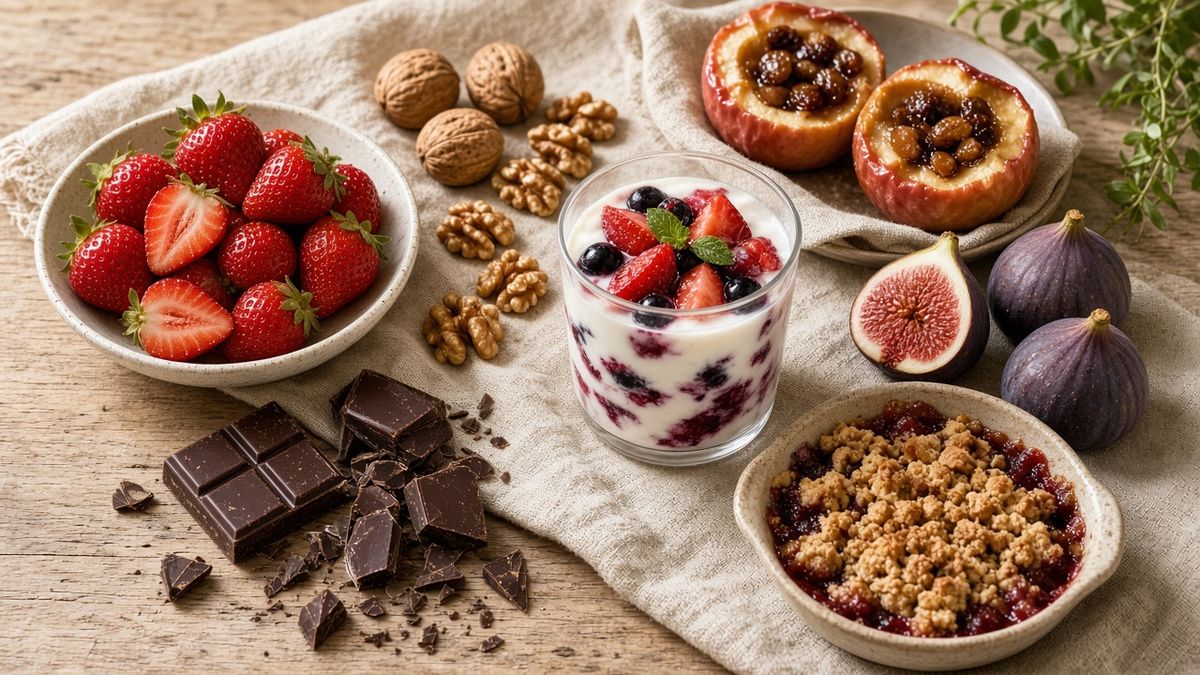
Dessert has a branding problem in longevity circles. One camp bans it. Another sells “better-for-you” cookies that are still ultra-processed dough with a fibre claim. A third points at dark chocolate and implies a square a day is a cardiovascular protocol.
The evidence is less theatrical. No dessert extends life. What shows up again and again is a pattern: more whole fruit, nuts, yoghurt, and fibre; less free sugar and ultra-processed food; enough satisfaction that the evening does not rebound into a second pudding. The Schwingshackl et al. 2017 curves behind this site’s calculator are daily intakes, not a licence to add a virtuous pot on top of cake. Dessert is useful when it moves those groups and displaces the usual after-dinner tax.
This article is the argument. The recipes live in the Nutrition section.
What a longevity dessert is for
A useful sweet plate does four jobs:
- Moves a protective food group. Fruit, nuts, yoghurt, oats, or high-cocoa chocolate should be doing real work, not sitting as a garnish on sponge.
- Keeps free sugar in a boring range. WHO guidance is to keep free sugars under 10% of energy, and suggests 5% (about 25 g) for extra dental benefit. A typical cake slice can spend most of that budget in one sitting.
- Brings fibre and food structure, so fullness comes from plants rather than a second serving. That is the satiety argument after dinner.
- Replaces pastry, ice cream, or a sugar-sweetened drink. Adding berries to an already finished meal is nutrition. Swapping the sundae for berries and yoghurt is the longevity move.
The chassis is simple: whole fruit, a measured nut handful, unsweetened yoghurt or ricotta, oats or chia when you want a pudding texture, and a little 70% chocolate or cocoa when you want a chocolate note. Commercial “healthy dessert” roundups keep landing on the same ingredients, then burying them in maple, coconut sugar, and protein powder. The Longtime versions stay honest about dose and substitution.
How to read the evidence
Three rules keep the list honest:
- Food groups beat dessert fads. Strawberries are useful because fruit is useful, not because they photograph well next to chocolate.
- The study is rarely the recipe. COSMOS tested a cocoa extract. PREDIMED tested a Mediterranean pattern with extra-virgin olive oil or nuts. Neither randomised baked apples.
- Substitution is the mechanism that matters most. An apple that replaces biscuits is doing different work from an apple on top of an already high-fruit day.
In the 2017 food-group models, fruit benefit accumulated up to roughly 250–300 g/day, then flattened. Nuts had a steep per-serving signal that flattened around 15–20 g/day. That is a handful, not a grazing bag, and it is why these recipes keep nuts measured.
Ultra-processed desserts have a separate problem. In Kevin Hall’s inpatient feeding trial, people ate about 500 extra calories a day on an ultra-processed menu even when presented calories, sugar, and fibre were matched to an unprocessed menu. Ice cream, packaged cookies, and “protein” puddings sit on that side of the kitchen. Whole fruit and yoghurt sit on the other.
The ten desserts
Each recipe is written so you can make it on a weeknight. Protein and fibre figures are estimates from typical USDA-style portions, not lab analyses.
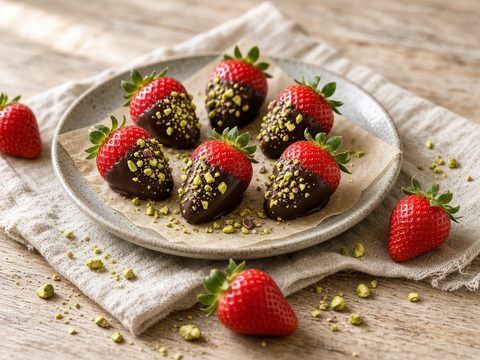 Ten minutes
Dark chocolate strawberries
Berries first, a thin 70% shell, pistachios for the nut serving. Chocolate is the coat, not the dessert.
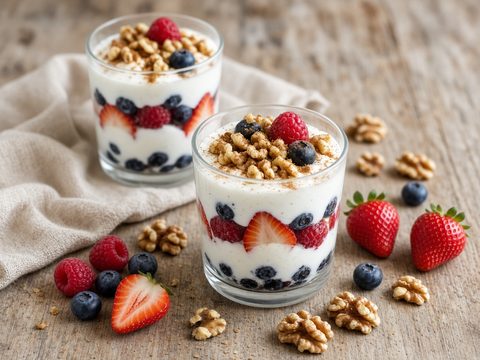 Assemble
Yoghurt, berry and walnut parfait
The highest-protein dessert here. Plain yoghurt, frozen berries, a measured handful of walnuts.
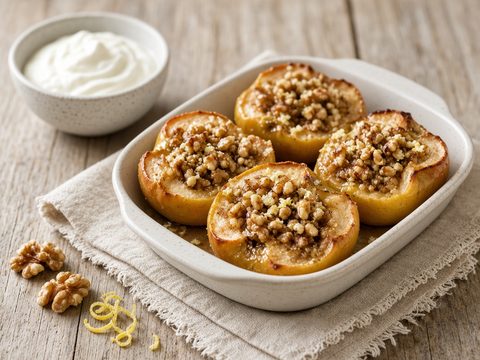 Warm fruit
Baked apples with walnuts
The proverb, heated. Fibre and polyphenols stay in the fruit; pastry never arrives.
 Tray pudding
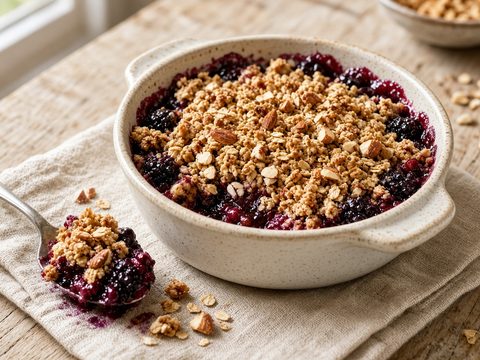
Warm berry oat crumble
Fruit with a whole-grain lid. Oats have trial evidence for cholesterol; almonds keep the topping honest.
 Make-ahead
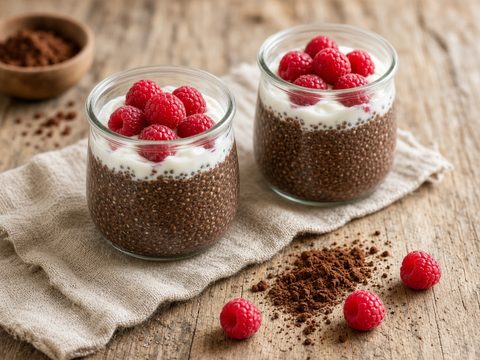
Cocoa chia pots
Chocolate flavour from cocoa powder, fibre from chia, protein from yoghurt. Not a mousse cup.
 Cooked fruit
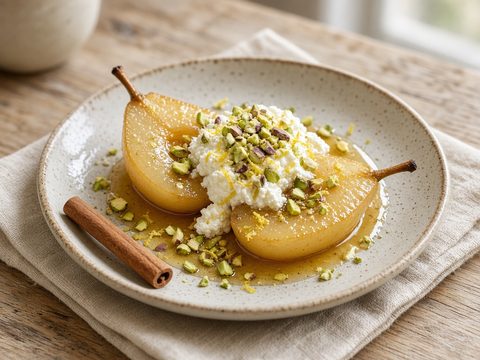
Tea-poached pears with ricotta
Pears sit with apples in the fruit analyses. Tea and citrus sweeten them without syrup.
 No-bake
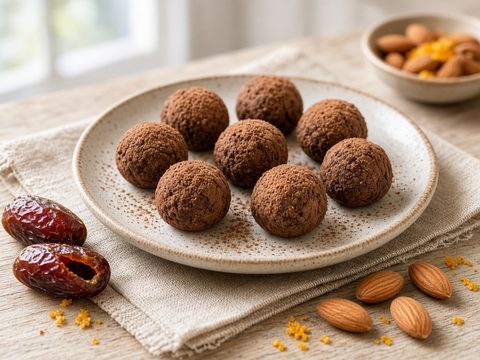
Date and almond cocoa bites
Whole-fruit sweetener bound with nuts. Two bites is a serving. A tin is a problem.
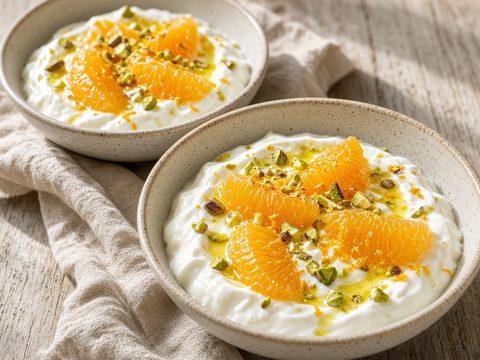 Assemble
Citrus yoghurt with olive oil
Whole orange, not juice. A teaspoon of extra-virgin olive oil is the PREDIMED fat, not a cake batter.
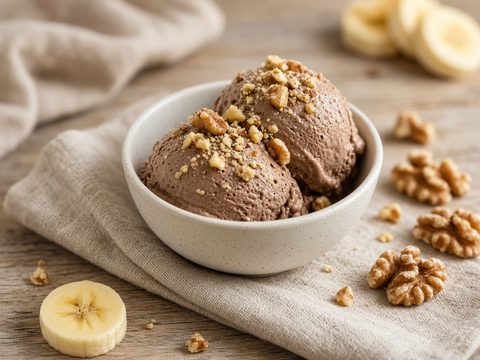 Blender
Frozen banana cocoa cream
Whole fruit blended cold. It only wins if it replaces ice cream, not if it becomes a second evening snack.
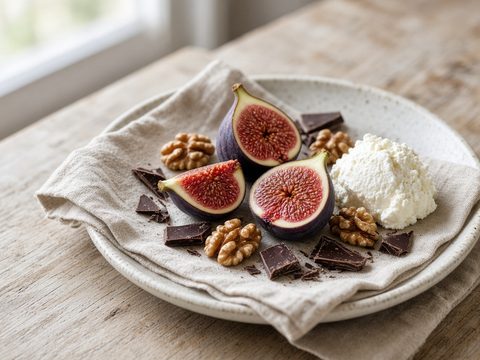 Cheese course
Figs, walnuts and dark chocolate
The Mediterranean dessert that does not pretend to be cake. Fruit, a nut handful, a few shards of 70%.
Full ingredients, methods, and swaps are on the dessert recipes page.
Why these ingredients keep showing up
Berries and other whole fruit
Pooled cohort work on fruit and vegetables finds lower cardiovascular and all-cause mortality as intake rises, with apples, pears, and citrus among the subtypes that keep appearing. A 2016 BMJ analysis is one of the sources this site already uses for that fruit signal; later dose-response work by Aune et al. reported about 8% lower cardiovascular risk per 200 g/day of fruit and vegetables combined, with benefit still visible toward higher intakes.
Berries earn a special seat because they are dense in anthocyanins and fibre relative to their sugar. Short randomised trials have moved LDL cholesterol, blood pressure, and other intermediate markers in mixed berry feeding studies. Those trials are not mortality trials. They are a reason to put strawberries on yoghurt rather than under pastry.
Apples are the cheap version of the same idea. A 2019 systematic review associated higher apple or pear intake with about 15% lower all-cause mortality in observational pooling. The proverb overclaims. The fruit still earns a baked-apple recipe. See an apple a day.
Juice is still not fruit. See whole fruit versus juice.
Nuts
Nuts are one of the steepest per-serving mortality signals in the food-group literature. Schwingshackl reported roughly 24% lower mortality per 28 g/day in linear analysis, with the curve flattening around a small handful. PREDIMED assigned high-risk adults a Mediterranean pattern plus mixed nuts and saw fewer major cardiovascular events than a reduced-fat control diet in the 2018 republication (hazard ratio 0.72 in the nut arm). That is a dietary pattern trial, not a walnut-on-ice-cream trial. It is still the cleanest reason to keep walnuts and pistachios on the dessert plate and to stop at a handful.
Yoghurt and ricotta
Dairy as a category is mixed. Yoghurt looks better than the average milk carton. A 2023 dose-response meta-analysis associated higher yoghurt intake with about 7% lower all-cause mortality and 11% lower cardiovascular mortality versus low intake, with little extra benefit above about half a serving a day. That is observational, residual confounding included. Practically, unsweetened yoghurt is a protein base that makes fruit feel like dessert. Flavoured cups often spend the sugar budget before the fruit arrives.
Oats and chia
Oats are one of the few dessert-adjacent foods with randomised-trial evidence for lipids and glycaemic control, mostly through beta-glucan. That is why the crumble lid is oats and almonds, not shortcrust. See oats and blood sugar. Chia is a fibre delivery system with a pudding texture. The longevity claim is the fibre, not a superfood aura.
Cocoa, not chocolate mythology
The COSMOS trial randomised more than 20,000 older adults to a cocoa flavanol extract (500 mg flavanols/day) or placebo. The primary composite of total cardiovascular events did not reach significance (HR 0.90, 95% CI 0.78–1.02). Cardiovascular death, a secondary endpoint, was 27% lower. Per-protocol analyses looked more favourable. That is a real signal with real limits: extract, not a bar; secondary endpoint; a few years of follow-up.
A thin coat of 70% chocolate or a spoon of cocoa powder is the kitchen version of “use cocoa.” It is not the COSMOS dose. Milk chocolate, chocolate cake, and cocoa sugar bombs are a different food.
Olive oil on yoghurt
PREDIMED’s other arm used extra-virgin olive oil and reported a hazard ratio of 0.69 for major cardiovascular events versus the control diet. A teaspoon over citrus yoghurt is a way to eat that fat in a sweet course. It is not a reason to bake olive-oil cakes with 200 g of sugar.
What we left out
Cheesecake, “healthy” brownies, protein ice cream, date-sweetened cookie dough, and anything that needs a scoop of powder to hit its label can be fine foods. They are not the most efficient way to move the mortality-linked food groups.
Honey, maple, and coconut sugar are still free sugars under WHO framing. Dates are whole fruit with fibre, but they are concentrated. Two bites of the almond mix is a dessert. Eight bites is confectionery with better marketing.
Red wine, resveratrol supplements, and “superfood” chocolate are out. The first is alcohol. The second is a hypothesis. The third is usually sugar.
If you have diabetes, fructose malabsorption, or a clinician-directed carbohydrate target, treat these as meal components and get advice that knows your history. Population associations are not a personal glucose forecast.
How to use the week
A practical rotation, not a purity test:
- Most evenings: yoghurt and berries, citrus yoghurt, or the fig-and-walnut plate.
- When you want it warm: baked apples or the berry oat crumble, especially if lunch skipped fruit.
- When you want chocolate: strawberries, the cocoa chia pot, or a few shards on figs. Not all three.
Keep nuts to a small handful across the whole day, not per course. Frozen berries and tinned pears (in juice, drained) are longevity foods. If a recipe is only useful when it is Instagram-pretty, it will die on Wednesday.
If you want to see how these intakes sit on the dose-response curves, use the calculator after a typical day, not after one virtuous pear.
Bottom line
The best longevity dessert is the one that quietly raises fruit, nuts, or yoghurt and does not introduce a pastry. Make the swap, keep the portion ordinary, and let breakfast and dinner finish the food-group work.
Sources
- Schwingshackl et al., AJCN 2017: Food groups and risk of all-cause mortality
- Aune et al., BMJ 2016: Fruit and vegetable intake and risk of cardiovascular disease, cancer and mortality
- Aune et al., Int J Epidemiol 2017: Fruit and vegetable intake, CVD, cancer, and mortality
- Gayer et al.: Apples, pears, cardiometabolic risk, and clinical outcomes
- Estruch et al., NEJM 2018: Mediterranean diet with extra-virgin olive oil or nuts
- Sesso et al., AJCN 2022: COSMOS cocoa flavanol supplementation and cardiovascular events
- Tutunchi et al., Public Health Nutr 2023: Yogurt consumption and mortality
- Huang et al., 2016: Berries and cardiovascular risk factors, randomised trials
- Hou et al., 2015: Oats intake and lipids and glycaemic control in type 2 diabetes
- Hall et al., Cell Metab 2019: Ultra-processed diets and ad libitum energy intake
- WHO, 2015: Guideline on sugars intake for adults and children
- USDA FoodData Central
- Longtime: 12 foods worth eating for longevity
- Longtime: An apple a day
- Longtime: Whole fruit versus juice
- Longtime: Oats, beta-glucan, and blood sugar
- Longtime: 10 snacks worth eating for longevity
- Longtime: Nutrition recipes