Nutrition · Between meals
10 Snacks Worth Eating for Longevity
The useful snack is not a protein bar or a bag of 'better' crisps. It is a small plate you will actually repeat, built from the same food groups the calculator already scores, and eaten instead of a packet.
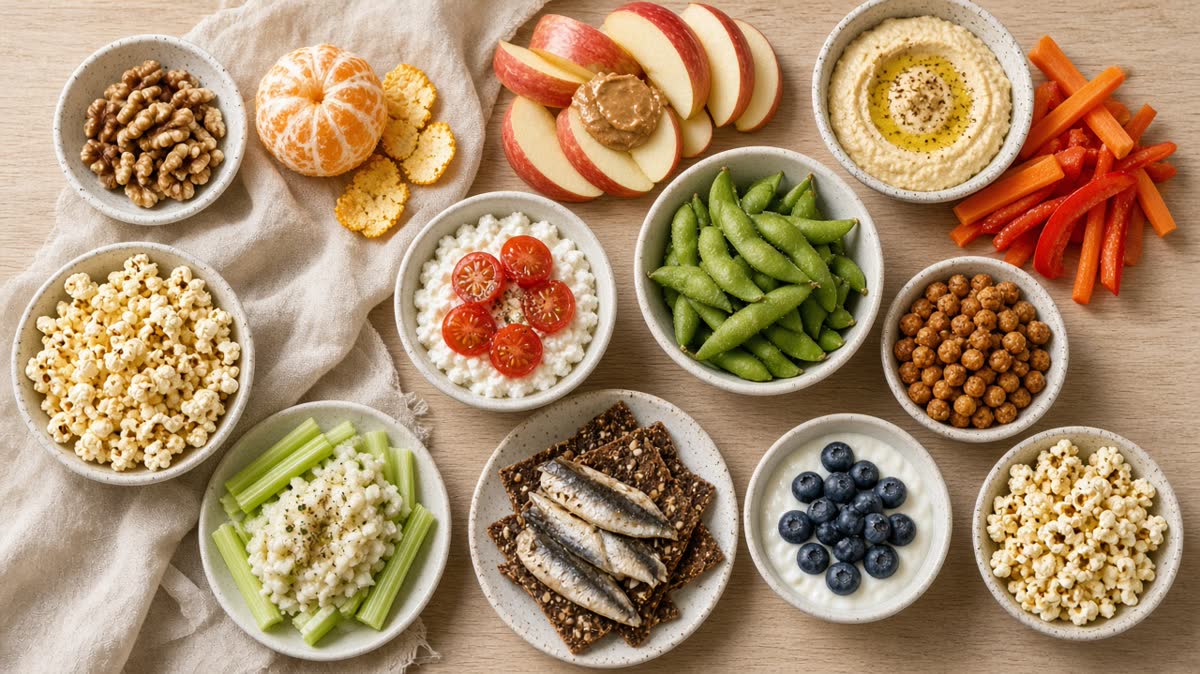
The snack aisle has a branding problem in longevity circles. One camp treats any eating between meals as a failure of discipline. Another sells bars, puffs, and “high-protein” crisps that are still ultra-processed snacks with a fibre claim. A third points at a grazing bag of nuts and implies the handful never ends.
The evidence is less theatrical. No snack extends life. What shows up again and again is a pattern: more nuts, fruit, legumes, yoghurt, vegetables, whole grains, and fish; less ultra-processed food and free sugar; enough satisfaction that the afternoon does not rebound into pastry. The Schwingshackl et al. 2017 curves behind this site’s calculator are daily intakes, not a licence to add a virtuous pot on top of an already finished day. A snack is useful when it moves those groups and displaces the usual packet.
This article is the argument. The recipes live in the Nutrition section.
What a longevity snack is for
A useful between-meal plate does four jobs:
- Moves a protective food group. Nuts, fruit, beans, yoghurt, vegetables, rye, or fish should be doing real work, not sitting as a garnish on a cracker pile.
- Keeps the portion snack-sized. Nuts flatten around a handful. Fruit plateaus around 250–300 g/day. A snack that quietly spends the day’s nut or sugar budget is just a small meal with better marketing.
- Brings fibre, protein, or water-rich volume, so fullness comes from food structure rather than willpower. That is the satiety argument between lunch and dinner.
- Replaces crisps, pastry, a sugar-sweetened drink, or a second dessert. Adding an apple to an already finished day is nutrition. Swapping the vending-machine run for an apple is the longevity move.
The chassis is simple: a measured nut handful, whole fruit, a scoop of beans or hummus, unsweetened yoghurt or cottage cheese, raw vegetables, a whole-grain crisp, and the occasional tin of fish. Commercial “healthy snack” roundups keep landing on the same ingredients, then burying them in date paste, seed oils, and a protein-bar wrapper. The Longtime versions stay honest about dose and substitution.
How to read the evidence
Three rules keep the list honest:
- Food groups beat snack fads. Edamame is useful because legumes are useful, not because soy has a wellness brand.
- The study is rarely the recipe. PREDIMED tested a Mediterranean pattern with extra-virgin olive oil or nuts. Schwingshackl pooled daily food-group intakes. Neither randomised hummus and carrot sticks.
- Substitution is the mechanism that matters most. An orange that replaces a sugar-sweetened drink is doing different work from an orange on top of an already high-fruit day.
In the 2017 food-group models, fruit benefit accumulated up to roughly 250–300 g/day, then flattened. Nuts had a steep per-serving signal that flattened around 15–20 g/day. Legumes showed a roughly 10–16% lower mortality toward 100–150 g/day cooked beans. That is a daily scoop, not a grazing tin, and it is why these recipes keep nuts measured and beans in a bowl.
Ultra-processed snacks have a separate problem. In Kevin Hall’s inpatient feeding trial, people ate about 500 extra calories a day on an ultra-processed menu even when presented calories, sugar, and fibre were matched to an unprocessed menu. Bars, puffs, and “protein” crisps sit on that side of the kitchen. Whole fruit, yoghurt, and a scooped handful of nuts sit on the other.
If you eat in an eight-hour window, you may not need a snack at all. The Triple-F pattern can skip the 4pm plate; it should not skip plants, protein, and fibre when you do eat. A snack is a tool for hunger, training, or a long gap. It is not a longevity requirement.
The ten snacks
Each recipe is written so you can assemble it in minutes, or batch a tray on Sunday. Protein and fibre figures are estimates from typical USDA-style portions, not lab analyses.
 Assemble
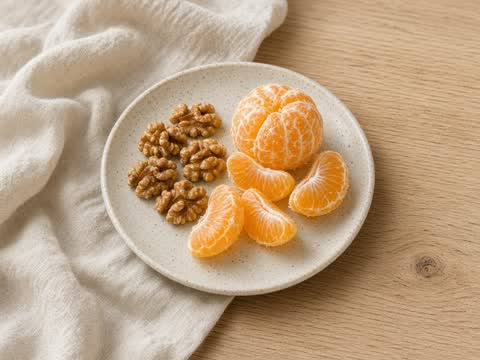
Walnuts and an orange
The PREDIMED nut serving plus whole citrus. A handful, not a grazing bag. Peel the orange; juice does not count.
 Five minutes
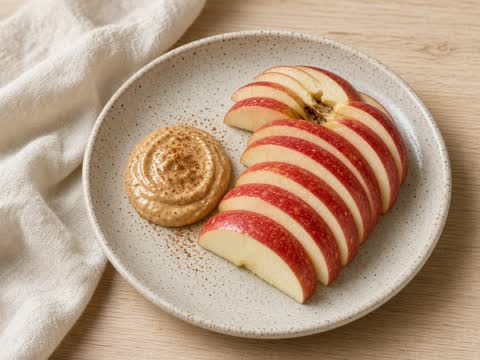
Apple with almond butter
The proverb, with a measured spoon of nuts so the fruit actually holds you. Skin on. Fifteen grams of butter, not the jar.
 Dip and crunch
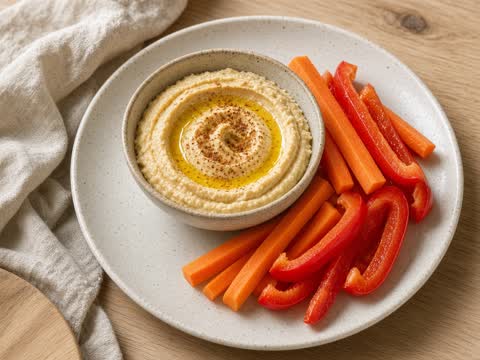
Hummus, carrots and peppers
The snack that finally includes legumes. Chickpeas do the work; the vegetables supply volume that crisps never will.
 Ten minutes
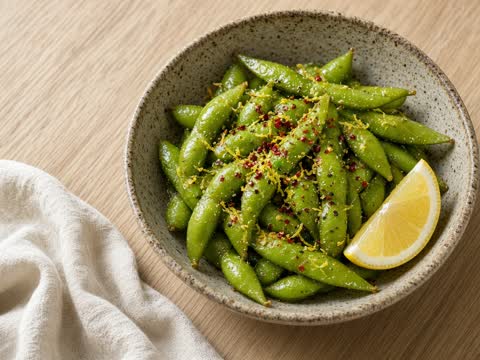
Lemon chilli edamame
Frozen soybeans, lemon, chilli. Protein and fibre you have to shell or chew, which is the point.
 Assemble
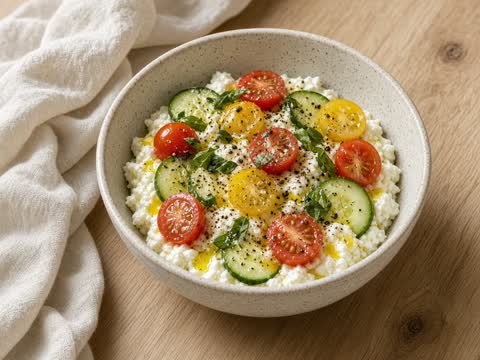
Cottage cheese, tomato and cucumber
The highest-protein snack here. Dairy as a supporting actor, vegetables as the volume, olive oil as the fat.
 Tray batch
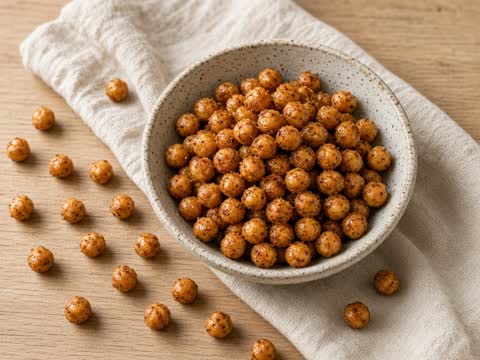
Crunchy roasted chickpeas
A tin, a tray, a measured scoop. Portable beans that replace a crisp bag if you stop at a handful.
 Five minutes
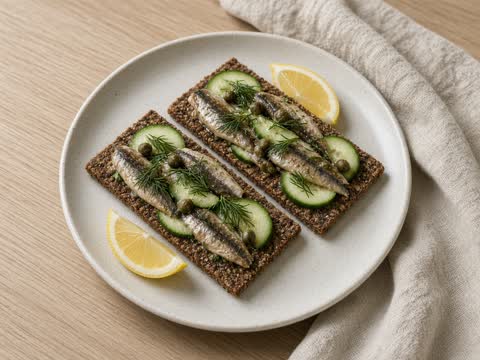
Sardines on rye crisps
The cleanest way to get fish into a gap. A small tin, dense rye, lemon. Not a cracker pile with a sardine garnish.
 Stovetop
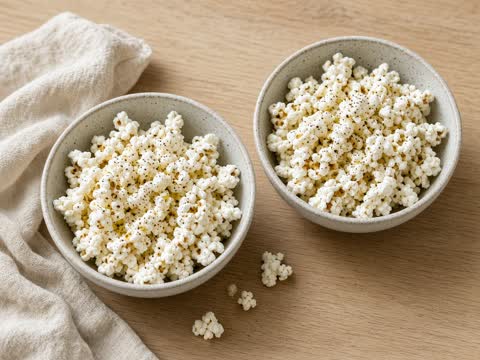
Olive-oil air-popped popcorn
Whole grain with volume. A teaspoon of oil, not a cinema tub. It only wins if it replaces crisps.
 Make-ahead
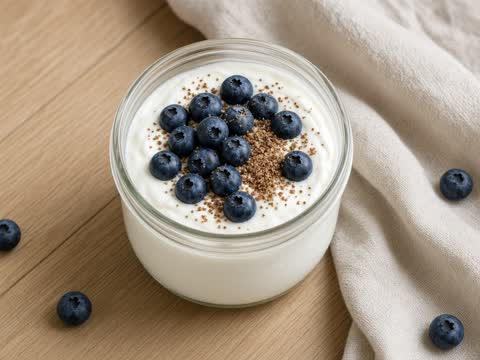
Blueberry yoghurt snack pot
Plain yoghurt, frozen berries, a spoon of flax. Snack-sized, not a parfait you eat after dinner as well.
 Smash
Smash
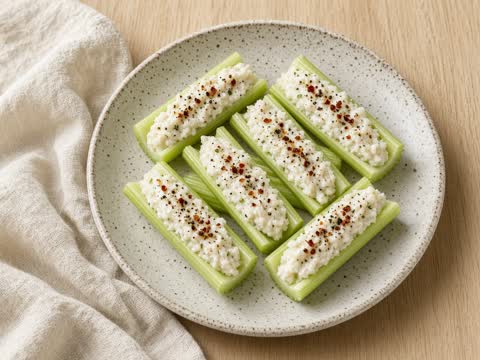
White-bean smash on celery
Beans between meals, which is what the long-lived cohorts were doing while snack brands wrote the script.
Full ingredients, methods, and swaps are on the snack recipes page.
Why these ingredients keep showing up
Nuts
Nuts are one of the steepest per-serving mortality signals in the food-group literature. Schwingshackl reported roughly 24% lower mortality per 28 g/day in linear analysis, with the curve flattening around a small handful. PREDIMED assigned high-risk adults a Mediterranean pattern plus mixed nuts and saw fewer major cardiovascular events than a reduced-fat control diet in the 2018 republication (hazard ratio 0.72 in the nut arm). That is a dietary pattern trial, not a walnut-grazing trial. It is still the cleanest reason to keep walnuts and almonds on the snack plate and to stop at a handful.
Almond butter is the same food group in a jar. Fifteen grams is a serving. Eating it with a spoon from the tub is how the curve stops helping.
Whole fruit
Pooled cohort work on fruit and vegetables finds lower cardiovascular and all-cause mortality as intake rises, with apples, pears, and citrus among the subtypes that keep appearing. A 2016 BMJ analysis is one of the sources this site already uses for that fruit signal. A 2019 systematic review associated higher apple or pear intake with about 15% lower all-cause mortality in observational pooling. The proverb overclaims. The fruit still earns an afternoon apple. See an apple a day.
Berries earn a seat because they are dense in anthocyanins and fibre relative to their sugar. Short randomised trials have moved intermediate cardiovascular markers in mixed berry feeding studies. Those trials are not mortality trials. They are a reason to put blueberries on yoghurt rather than inside a cereal bar.
Juice is still not fruit. See whole fruit versus juice.
Legumes
Beans, chickpeas, lentils, and soybeans are the longevity staple most snack lists forget. Nonlinear models in Schwingshackl suggested about 10–16% lower mortality toward 100–150 g/day cooked legumes. Hummus, roasted chickpeas, edamame, and a white-bean smash are four ways to put that scoop between meals instead of waiting for a dinner stew you will not cook on Wednesday.
Edamame is just young soybeans. The claim is the food group, the protein, and the chew, not an isoflavone protocol.
Yoghurt and cottage cheese
Dairy as a category is mixed. Yoghurt looks better than the average milk carton. A 2023 dose-response meta-analysis associated higher yoghurt intake with about 7% lower all-cause mortality and 11% lower cardiovascular mortality versus low intake, with little extra benefit above about half a serving a day. That is observational, residual confounding included.
Cottage cheese is less studied as a named food. Practically, it is a high-protein, low-sugar dairy that makes tomatoes and cucumber feel like a plate. Flavoured yoghurt cups often spend a free-sugar budget before the fruit arrives. WHO guidance is to keep free sugars under 10% of energy, and suggests 5% (about 25 g) for extra dental benefit. A sweetened pot can spend most of that in one sitting.
Fish and whole grains
Fatty fish is the cleanest animal food in the mortality curves, with about 10% lower risk up to roughly 200 g/day. A small tin of sardines is an easy way to move that group when dinner will be vegetarian. Rye crisps supply the whole-grain serving. Whole grains had the strongest NutriGrade rating in the 2017 review: each extra 30 g/day tracked with roughly 8% lower mortality, with most of the benefit arriving by about 100 g/day.
Popcorn is a whole grain with unusual volume when it is air-popped or stovetop-popped in a teaspoon of olive oil. Cinema tubs, butter, sugar, and salt turn it into a different snack. See the satiety solution.
What we left out
Protein bars, “high-protein” crisps, date-sweetened cookie dough bites, trail-mix grazing bags, rice cakes with a sweet spread, and anything that needs a scoop of powder to hit its label can be fine foods. They are not the most efficient way to move the mortality-linked food groups.
Dried fruit is whole fruit with the water removed. A couple of dates can sweeten a bean smash. A bag of dried mango is confectionery with better marketing.
Cheese-and-cracker plates, granola clusters, and smoothie bowls are meals wearing a snack costume. If you need that much food, eat a meal.
If you have diabetes, chronic kidney disease, a clinician-directed sodium or carbohydrate target, or a nut allergy, treat these as meal components and get advice that knows your history. Population associations are not a personal glucose or potassium forecast. Sardines and roasted chickpeas can be salty; rinse, drain, and go easy on added salt if that is your constraint.
People who train in the afternoon, take certain medications with food, are pregnant, or have a history of disordered eating should not treat skipping snacks as a longevity requirement.
How to use the week
A practical rotation, not a purity test:
- Most gaps: an apple, an orange and walnuts, or the yoghurt pot if you need protein.
- When you want something savoury: hummus and vegetables, the cottage-cheese plate, or celery with bean smash.
- When you need it portable: roasted chickpeas or popcorn, portioned before you leave the kitchen.
- Once or twice: sardines on rye, especially on days dinner will not include fish.
Keep nuts to a small handful across the whole day, not per course. Frozen edamame, frozen berries, and rinsed tins are longevity foods. If a snack is only useful when it is Instagram-pretty, it will die on Wednesday.
If you want to see how these intakes sit on the dose-response curves, use the calculator after a typical day, not after one virtuous orange.
Bottom line
The best longevity snack is the one that quietly raises nuts, fruit, legumes, or yoghurt and does not introduce a packet. Make the swap, keep the portion ordinary, and let breakfast and dinner finish the food-group work.
Sources
- Schwingshackl et al., AJCN 2017: Food groups and risk of all-cause mortality
- Aune et al., BMJ 2016: Fruit and vegetable intake and risk of cardiovascular disease, cancer and mortality
- Gayer et al.: Apples, pears, cardiometabolic risk, and clinical outcomes
- Estruch et al., NEJM 2018: Mediterranean diet with extra-virgin olive oil or nuts
- Tutunchi et al., Public Health Nutr 2023: Yogurt consumption and mortality
- Huang et al., 2016: Berries and bioactives and cardiovascular risk factors
- Hall et al., Cell Metab 2019: Ultra-processed diets and ad libitum energy intake
- Kohanmoo et al., 2020: Protein consumption, appetite, and appetite-regulating hormones
- WHO, 2015: Guideline on sugars intake for adults and children
- USDA FoodData Central
- Longtime: 12 foods worth eating for longevity
- Longtime: An apple a day
- Longtime: Whole fruit versus juice
- Longtime: The satiety solution
- Longtime: Nutrition recipes