Nutrition · First meal
The Best Breakfasts for a Longer Life
The useful breakfast is not a juice cleanse or a three-egg fry-up. It is a first meal you will actually repeat, built from the same food groups the calculator already scores.

Breakfast has a branding problem in longevity circles. One camp skips it for a 16:8 window. Another turns it into a protein contest. A third copies a Blue Zone slogan and eats leftover beans without asking whether the rest of the day still looks like cereal and bacon.
The evidence is less theatrical. No single breakfast extends life. What shows up again and again is a pattern: more whole grains, vegetables, fruit, nuts, legumes, and fish; less processed meat and sugar-sweetened drink; enough protein and fibre that the meal is satisfying. The Schwingshackl et al. 2017 food-group curves behind this site’s calculator are daily intakes, not a morning ritual. Breakfast is simply the easiest place to start stacking them, especially if lunch and dinner are already spoken for.
This article is the argument. The recipes live in the new Nutrition section.
What a longevity breakfast is for
A useful first meal does four jobs:
- Moves a protective food group. Oats, beans, berries, greens, nuts, or fish should be doing real work, not sitting as a garnish on toast.
- Puts protein on the table early. Spreading roughly 20–40 g across meals is easier than saving it all for dinner. See protein, enough not a cult.
- Brings fibre and water-rich volume, so fullness comes from food structure rather than willpower. That is the satiety argument in kitchen form.
- Avoids the usual breakfast tax. Processed meat, pastry, and juice can cancel a virtuous yoghurt pot in a single sitting.
Mediterranean-style, high-protein, make-ahead breakfasts are a practical way to hit those jobs on a weekday. Commercial roundups, including EatingWell’s high-protein Mediterranean breakfast collections, keep landing on the same chassis: eggs with vegetables, yoghurt with fruit and nuts, overnight oats, chia pots, the occasional fish plate. The chassis is sound. The Longtime versions lean harder on legumes and whole plants, and they stay honest about eggs: useful, not a daily three-egg habit.
If you skip breakfast
The Triple-F pattern includes time-restricted eating: eat in an eight-hour window, often from midday. That is a scheduling tool, not a nutrient exemption.
If your first meal is at noon, use the same plate. The white-bean bake, the lentil bowl, and the salmon rye plate are better “break-fasts” than a late pastry. Time-restricted eating only helps if the food inside the window is still a high-quality diet and total intake does not rebound.
People who train in the morning, take certain medications with food, are pregnant, or have a history of disordered eating should not treat skipping breakfast as a longevity requirement.
The six breakfasts
Each recipe is written so you can cook once and eat for several days. Protein and fibre figures are estimates from typical USDA-style portions, not lab analyses.
 Batch savoury
White-bean, kale and lemon egg bake
The breakfast that finally includes legumes. A modest egg custard over beans and greens, sliced for the week.
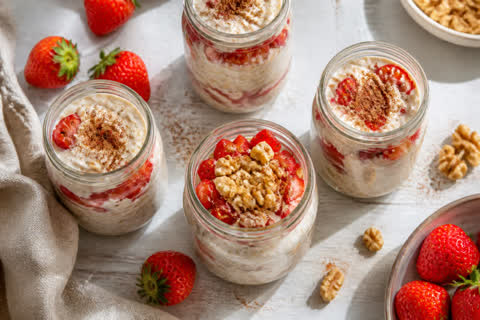 Overnight oats
Strawberry, walnut and yoghurt oat jars
Rolled oats have trial evidence for cholesterol and blood sugar. Yoghurt and walnuts stop the bowl from being only carbohydrate.
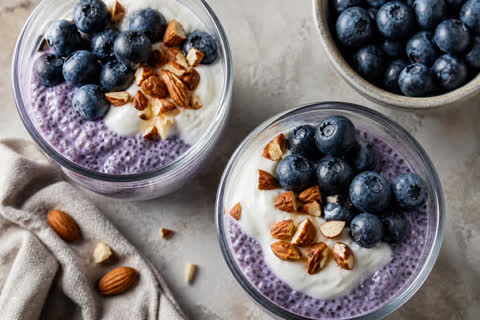 Make-ahead pot
Blueberry chia pots with almond yoghurt
Seeds, fruit, and yoghurt without turning breakfast into a dessert cup. Fibre is the point.
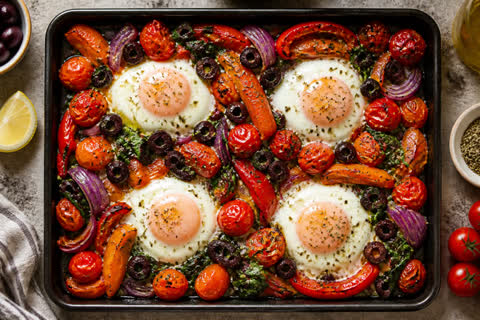 One-tray savoury
Sheet-pan peppers, tomatoes and eggs
A vegetable serving that happens to include an egg. Roast the tray ahead; add eggs when you reheat.
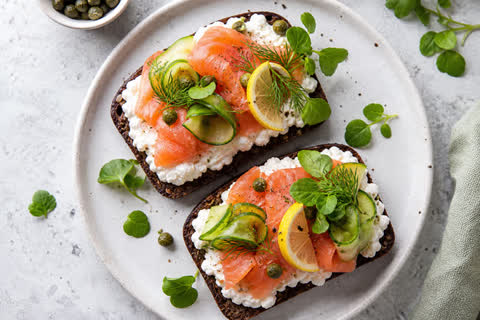 Five minutes
Rye, salmon and cucumber plates
The cleanest way to get fish into the first meal. Canned salmon counts. Herbed cottage cheese keeps protein high.
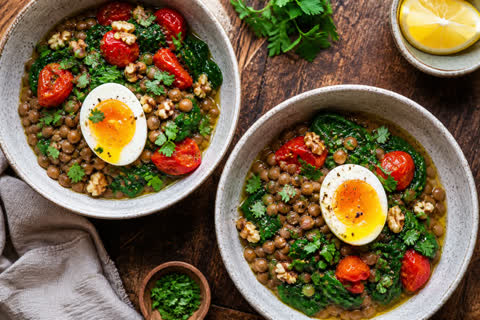 Savoury bowl
Warm lentil breakfast bowl
Leftover beans for breakfast, which is what the long-lived cohorts were doing while cereal brands wrote the script.
Full ingredients, methods, and swaps are on the breakfast recipes page.
What we left out
Protein pancakes, chocolate overnight oats, English-muffin breakfast casseroles, and anything that needs a scoop of powder to hit its label can be fine foods. They are not the most efficient way to move the mortality-linked food groups.
Eggs stay moderate. One egg in a vegetable tray is a different meal from a three-egg cheese omelette with bacon. Dairy is a supporting actor: yoghurt and a little feta, not a cheese-heavy strata every morning.
Juice is still not fruit. See whole fruit versus juice.
How to use the week
A practical rotation, not a purity test:
- Most mornings: oat jar or chia pot if you need grab-and-go; leftover egg-and-bean bake if you can heat a plate.
- A few mornings: lentil bowl or salmon rye, especially on days you will not otherwise eat legumes or fish.
- Once: the sheet-pan vegetables, when you already have the oven on.
Keep nuts to a small handful. Frozen berries and tinned beans are longevity foods. If a recipe is only useful when it is Instagram-pretty, it will die on Wednesday.
If you want to see how these intakes sit on the dose-response curves, use the calculator after a typical day, not after one virtuous breakfast.
Bottom line
The best longevity breakfast is the one that quietly raises fibre, plants, and protein and does not introduce processed meat. Make it once, eat it often, and let lunch and dinner finish the food-group work.
Sources
- Schwingshackl et al., AJCN 2017: Food groups and risk of all-cause mortality
- Estruch et al., NEJM 2018: Primary prevention of cardiovascular disease with a Mediterranean diet
- Hou et al., 2015: Oats intake and lipids and glycaemic control in type 2 diabetes
- Kohanmoo et al., 2020: Protein consumption, appetite, and appetite-regulating hormones
- USDA FoodData Central
- EatingWell: High-protein Mediterranean diet breakfasts to make ahead (commercial recipe genre; not a source of effect sizes)
- Longtime: 12 foods worth eating for longevity
- Longtime: Protein intake
- Longtime: The satiety solution
- Longtime: 10 snacks worth eating for longevity
- Longtime: Nutrition recipes